
The decision about which type of shower to install frequently comes down to a resin-based enclosure versus a tiled enclosure. The decision often focuses on initial cost and installation factors.
However, here are several other aspects to consider when deciding between a tile shower or a resin shower.
Seven Top Shower Choice Priorities
Don’t base your shower decision on first cost or ease of installation alone. This table compares resin and ceramic tile shower systems across the priorities most likely to affect long-term performance and satisfaction.
| Priority | Resin Showers | Ceramic Showers |
| Durability | ✓ | |
| Style | ✓ | |
| Health | ✓ | |
| Green Building | ✓ | |
| Cleanability | ✓ | |
| Installation and Waterproofing | ✓ | |
| Warranties | ✓ |
1. Durability
Resins and plastics degrade over time, becoming brittle and discolored. Ultraviolet (UV) exposure, chemical exposure, and even long-term water exposure require that you replace the resin shower much earlier than a tiled shower.
Refer to the warranty information from specific manufacturers of the resin shower you may be considering. These documents may exclude potential discoloration, fading, or yellowing under certain conditions.
Ceramic tile is scratch, dent, and stain resistant. Because of ceramic tile’s durability, a properly maintained tiled shower can look as good as when it was first installed, including through the life of the building.
Pro tip. Building an outdoor shower? Ceramic tile is available in options that withstand freeze-thaw conditions. This makes it the clear choice for outdoor showers, such as around a pool, or for washing up Fido.
2. Style and Design Flexibility
In addition to staying beautiful exponentially longer than resin alternatives, ceramic tile is available in endless color, shape, texture, and layout design options. You can coordinate tile with personal aesthetics and bespoke styles.
Ceramic tile showers allow for custom niches, benches, and lighting for a one-of-a-kind design. Because of ceramic tile’s versatility, a shower system can be built to suit any dimension.
Resin panels often attempt to mimic the appearance of ceramic tiled showers, but this compromise in style is readily apparent. Also, resin shower bases are only available in specific sizing options, which means your shower’s size is also limited.
[Related: 40 Free Shower Tile Ideas (Tips For Choosing Tile)]
3. Health Considerations
Health should always be a priority, but it may not be top of mind when planning a shower installation. Here are six important health points to consider.
Chemicals of Concern
Resin-based showers come in a variety of forms: PVC, acrylic, epoxy, and others.
Each of these resins is formulated with plasticizers, hardeners, and additives. They may include various chemicals of concern, including phthalates, bisphenols, methyl methacrylate, and other Red List chemicals.
Ceramic tile contains none of these chemicals.
Slip Resistance
Ceramic tile offers styles specifically classified by the manufacturer for slip resistance in different conditions. This tile classification standard is specifically aimed toward helping consumers and specifiers choose ceramic tile appropriate for a project.
In turn, you potentially encounter fewer slip-and-fall incidents.
Additionally, ceramic tile can have textures and/or grout joints that can increase traction for a shower floor. Slip resistance ratings may not be as readily available or standardized for resin shower flooring. This can preclude making an informed decision about its slip resistance relative to other options.
Microplastics
As resin showers are abraded and degrade, they can create microplastics that immediately become part of the water supply.
Chemicals like bisphenols and PFAS that can be present in resin showers are considered “forever chemicals” because they don’t readily decompose in nature.
VOCs
Resins can introduce volatile organic compounds (VOCs) into the living space through off-gassing. Formaldehyde, halogenated flame retardants, and phthalates can all potentially emerge as VOCs from a resin-based shower system.
VOCs can cause many adverse health effects and are concerning, especially for allergy sufferers. Scientific studies have observed that certain VOCs can “exacerbate or even cause allergic disorders and asthma.”
Ceramic tile emits no VOCs because it is manufactured at extremely high temperatures. The firing process helps remove organic contaminants, making it one of the healthiest flooring choices available.
Bacteria and Mold Resistance
Mold can feed off any organic matter.
Scientists define “organic” material as something that is carbon-based, either natural or manmade. Examples include plastic such as vinyl, resins, adhesives, paper, and other elements common in indoor spaces.
“Inorganic” materials don’t contain any organically produced carbon, such as rocks, minerals, and metals.
Whereas plastics are a breeding ground for mold, inorganic materials, such as ceramic tile, don’t provide any nutrition for mold to grow. For similar reasons, ceramic tile is also inhospitable to the growth of bacteria and other microbes.
Low-Step vs. Curbless
Accessibility can be a concern for people with mobility issues. Even the low step of a resin shower enclosure can be a barrier.
The Disability Act of 2005 defines universal design (UD) as an environment that can be accessed and used to the greatest extent possible by any person of any age, size, or ability.
A curbless ceramic shower provides a UD walk-in shower solution without a barrier that also can be a beautiful, sleek style statement.
[Related: 5 Healthy Reasons To Choose Ceramic Tile for Your Next Project]
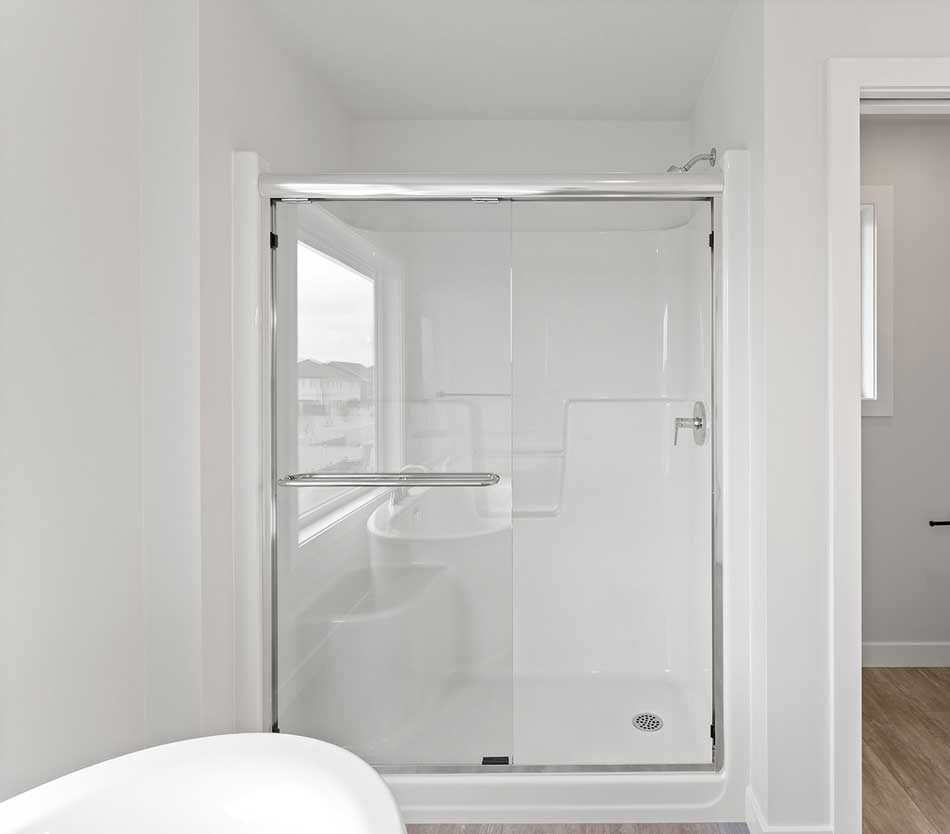
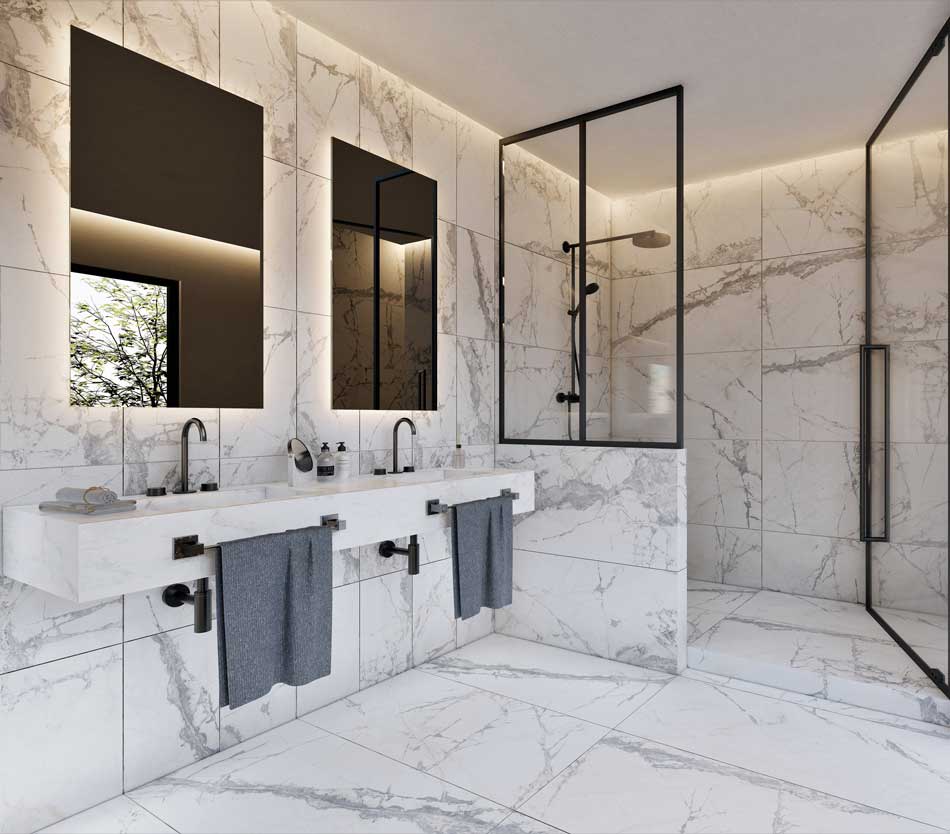
Plastic shower enclosures (left) can restrict size, style, and accessibility. Ceramic showers (right) offer a curbless entry customized to a preferred size and shape, with any personal aesthetic.
4. Green Building
Most resins start their life as oil or natural gas and can be considered a form of plastic. Because of this, a resin shower’s carbon footprint is higher than that of a ceramic tile shower.
In fact, ceramic tile is far friendlier to the environment than plastic.
A comparison of environmental product declarations (EPDs) – documents that evaluate a product’s impact on the environment – show that North American-made ceramic tile has the lowest overall impact when compared to other flooring options. Tile has the lowest global warming potential and the lowest fossil fuel resource depletion, making it a sustainable choice.
Beyond its lower environmental impact, ceramic tile can contribute to green building and recycled-content goals:
- Green building. Based on the selection of ceramic tile and installation products, a project can be eligible for multiple credits for having EPDs and health product declarations (HPDs), which score points in LEED. Resin-based shower systems don’t offer such credits and often don’t have the material transparency documentation necessary for green building programs.
- Recycled content. While the inert fillers in resin panels may include recycled content, the active ingredients in resins are almost always 100% virgin material. Tile typically has a significant quantity of recycled content as an inherent part of the product. It can also include scrap from take-back programs and scrap from other ceramic manufacturing processes.
Note. EPDs evaluate a product’s environmental impact. HPDs disclose a product’s contents and associated health information. LEED is a green building rating system that awards points for sustainable design, construction, and material choices.
5. Cleanability and Maintenance
Shower cleanability also affects long-term appearance and maintenance.
Cleaners can stain or fade resin enclosures. With resin, you need to avoid abrasive cleaners, scouring pads, and corrosive products that can damage the surface.
You can clean most messes on ceramic tile with clean water. Just sweep, wipe with water, and dry thoroughly; no harsh cleaning chemicals are needed. For extra-tough messes, follow the manufacturer’s guidelines on recommended cleaners and disinfectants or choose a pH-neutral cleaner.
When you need extra elbow grease, use a scrub brush without worrying about damaging ceramic tile’s hard-baked surface.
Pro tip. If you notice your grout looks “dirty” after cleaning, be sure your mop is only minimally wet while cleaning. That way, dirty water doesn’t collect in the grout joints. Likewise, keep your mop clean with fresh water.
[Related: Easy Cleaning Tips for Porcelain and Ceramic Tile]
6. Installation and Waterproofing
Ceramic-tiled shower enclosures are installed over a comprehensive waterproofing system to be sure the waterproofing underlayment and entire structure will perform leak-free and prevent damage to the surrounding area (or worse, floors below).
Resin-based shower systems are applied using construction adhesive and preformed panels. Installing preformed panels may at first appear easier than tiling, but there are both performance and risk trade-offs.
The seams of resin installations are the most vulnerable. If there is any missing or damaged caulk or wear that creates an imperfect seam, the entire system is compromised. As a result, the gap negates any “waterproofing.”
7. Warranties and Coverage
Here’s where durability and an effective installation system become your best warranty.
In commercial settings, warranties for resin panels can be from one to five years.
These warranties typically cover only manufacturing defects in the panel. A leak at the seams (or the damage a leak causes) isn’t covered.
Ceramic tile and tile installation product warranties often offer a lifetime warranty, even in a commercial setting.
[Related: Choosing the Best Ceramic Tile for Your Project]
Ceramic Tile vs. Resin: What Matters Most for a Shower
Ask informed questions about what is in the products selected for your shower project and how they perform.
While resin-based shower enclosures can be an alternative to the “real thing” (ceramic tile), resin lacks the advantage of ceramic’s durability, custom size options, style versatility, and curbless design for accessibility. Additionally, you may want to consider tile’s low environmental impact,ease of cleaning, and health benefits.
When you weigh these factors together, ceramic tile offers clear advantages over resin shower systems.