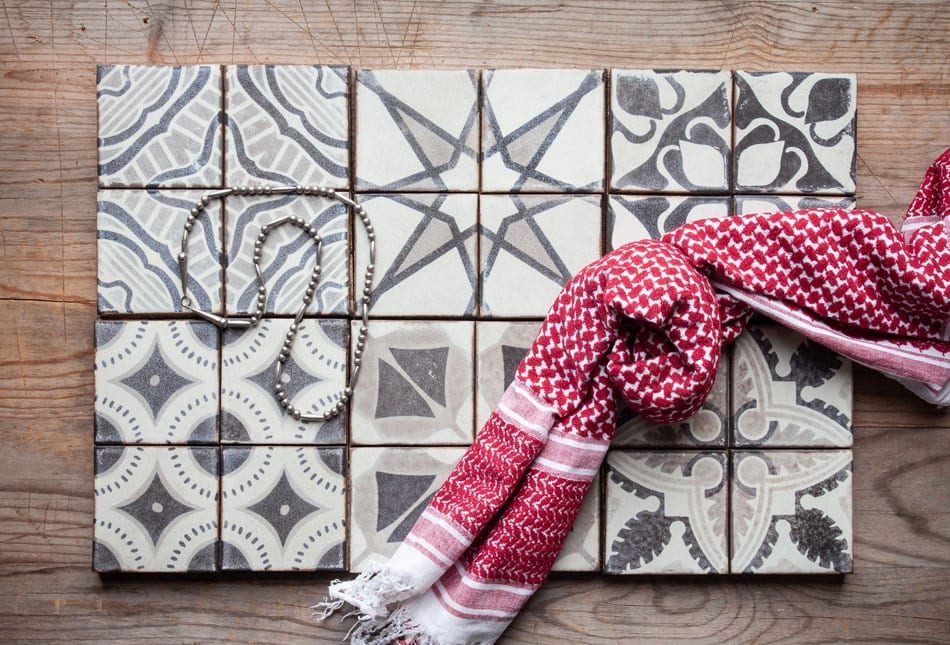
Geometric. Luminous. Stunningly precise. Islamic tile is one of the world’s great design traditions, and it’s never looked more at home than it does right now.
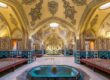
Islamic tile patterns date back more than 1,000 years, born in the mosques, palaces, and bathhouses of the medieval Islamic world. Today, modern Islamic tile designs carry that legacy into residential kitchens, primary baths, hotel lobbies, and outdoor courtyards without losing a degree of their original allure.
Old meets new. Ancient craft meets the modern material world. Understated or eclectic, Islamic tile in modern spaces leads to a special design.
[Related: Mosaic Tile Ideas: Your Big Guide to Little Tiles]
What Makes Islamic Tile Distinctive
Islamic tile is instantly recognizable, and it defies simple decoration. Unlike Western artistic traditions, Islamic design has its own visual logic. Once identified, it’s impossible to mistake it for anything else.
Defining characteristics of Islamic tile influences:
- Geometry over figuration. In Islamic design traditions, abstract pattern stands in for figurative imagery as the primary decorative vocabulary. Geometry becomes the artistic language because it’s boundless, complex enough to suggest the infinite, and universal enough to transcend cultures.
- Infinite repeat. Islamic tile patterns have no compositional center and no edge; they extend in every direction. This is what makes large installations feel immersive rather than merely decorative.
- Arabesque companion. Alongside hard-edged geometric work, flowing arabesque motifs (symmetrical vines, stylized leaves, curving botanical forms) bring organic counterpoint to the geometry. These two statements appear together and separately.
- Handmade imperfection. Traditional Islamic tile, particularly zellige, carries the mark of the hand. Modern manufacturers replicate this quality intentionally, giving porcelain and ceramic an artisan liveliness.
- Master palette. Cobalt, turquoise, terracotta, saffron, and ivory anchor Islamic tile traditions, with different regions favoring different combinations. Modern tile expands the range into neutrals and monochromes.
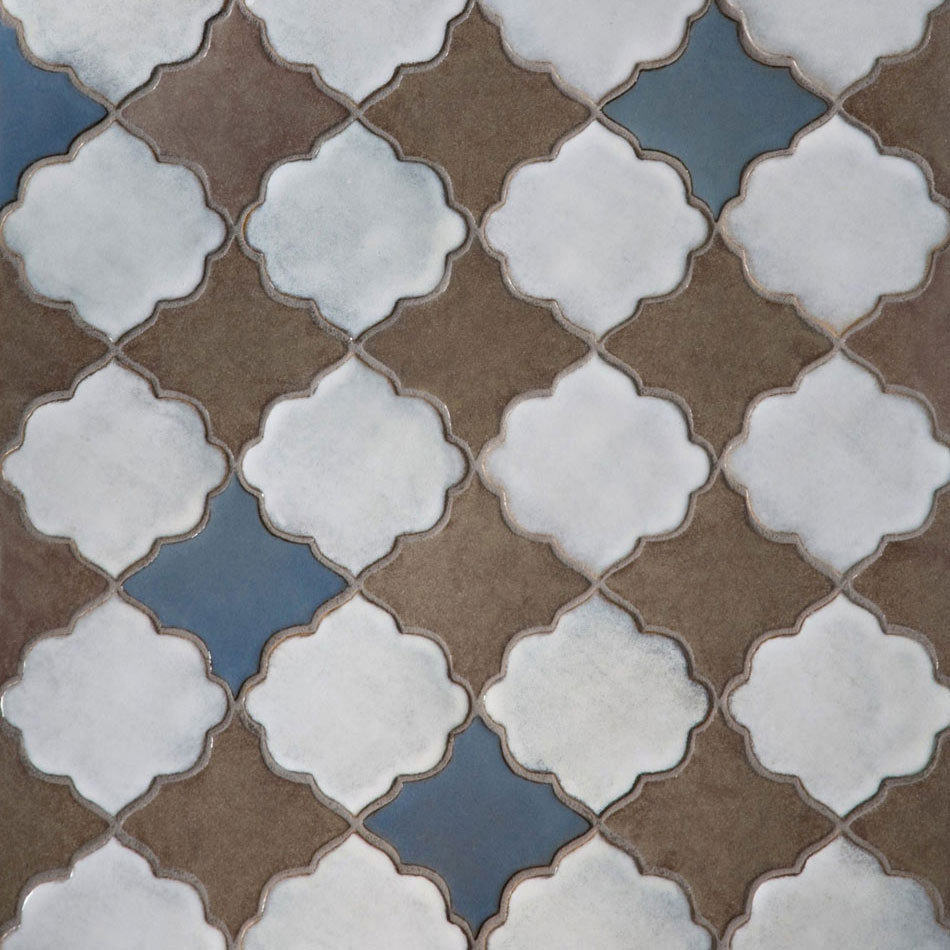
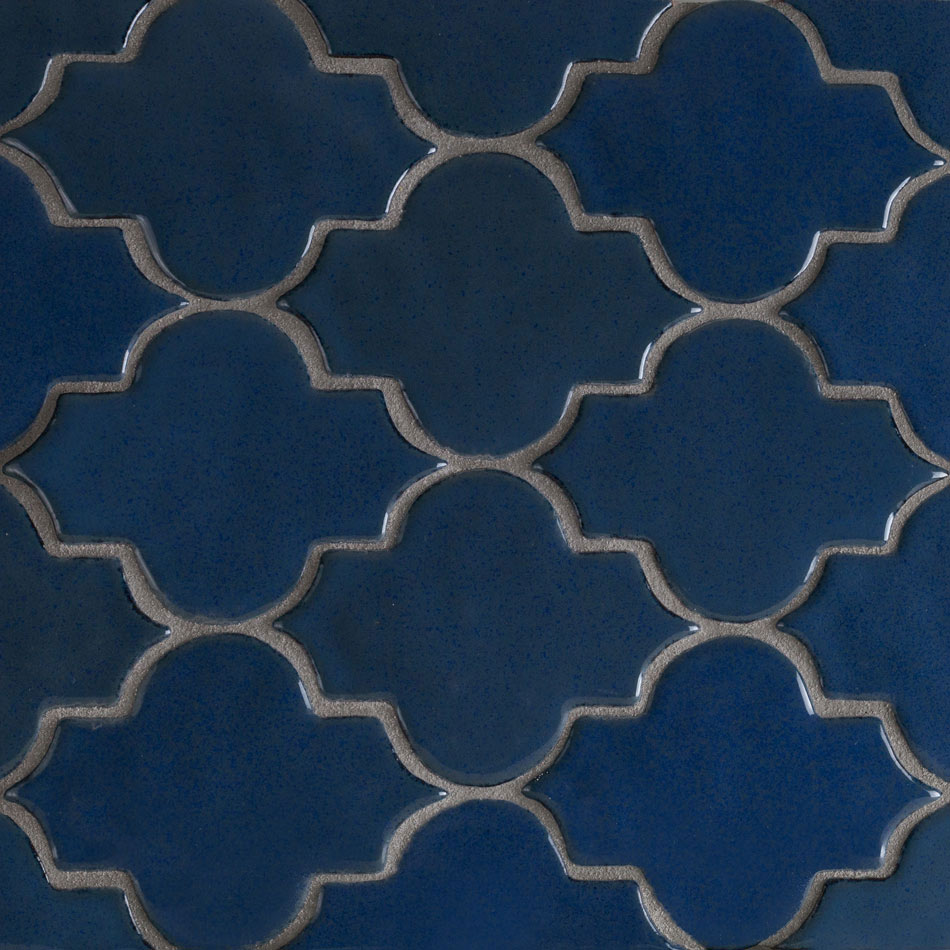
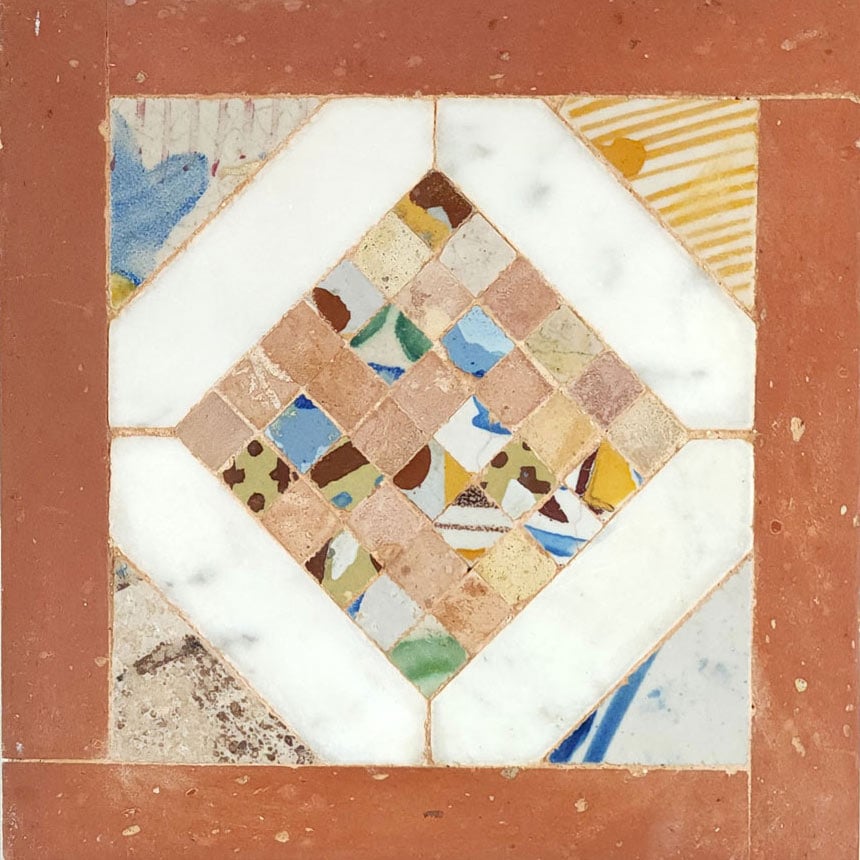
Islamic Tile’s Four Living Traditions
“Islamic tile” is a family of traditions, each with its own geographic origin, visual language, and material character. Knowing the distinctions helps match the right design for the right space.
1. Moroccan Zellige
Hand-cut from fired, glazed clay and assembled into geometric mosaics, Moroccan zellige is the most tactile of the four traditions. Its slightly uneven surface lets light play across the wall differently by the hour.
Its palette runs to saturated jewel tones: sapphire, amber, rust, and alabaster against a rich, dark grout. Only recently has digital relief printing made mass-produced tile able to mirror handmade zellige’s texture and depth in neo-zellige.
2. Turkish Iznik Tile
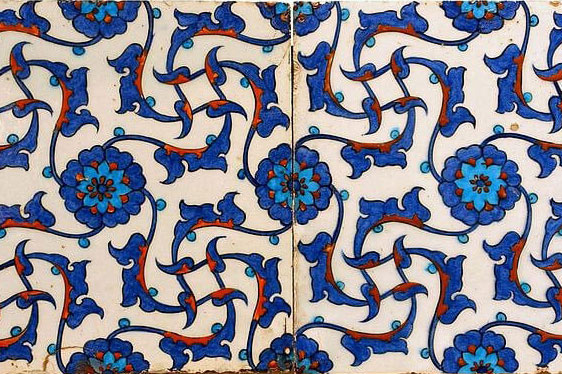
Named for the Anatolian city that produced it from the 15th century onward, Iznik tile is a flat, tin-glazed ceramic. Vivid red, lapis lazuli, and white floral-geometric patterns are its hallmark hues.
Iznik is the most “painterly” of the four traditions, closer in spirit to a fresco than a mosaic. It reads beautifully on vertical surfaces and accent walls viewed at a distance.
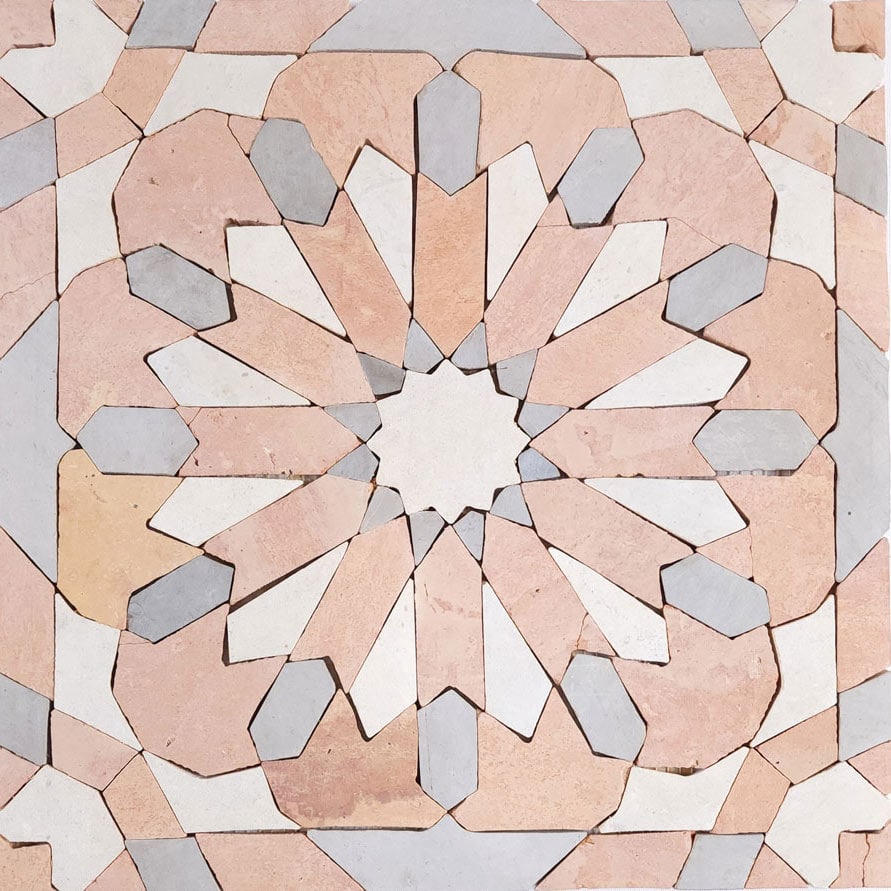
3. Persian Girih
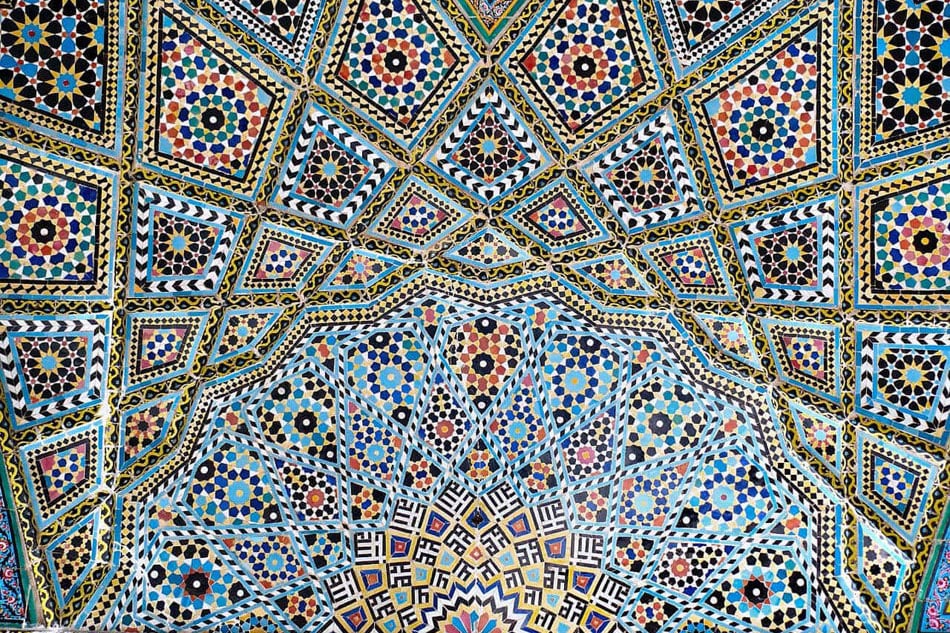
The geometric tradition of Iran and Central Asia centers on an intricate system of interlocking polygons built on rotational symmetry. These patterns achieve an almost impossible complexity in Persian girih (“knot”).
In 2007, researchers found that medieval Persian craftspeople had encoded quasi-crystalline mathematical structures in their tilework. Western mathematicians didn’t formally describe these structures until the 20th century.
4. Andalusian Azulejo
Carried into Spain and Portugal by Moorish craftspeople, Andalusian azulejo blends Islamic geometric precision with European decorative sensibilities.
Its palette tends toward cooler blues and greens, and its star-and-polygon repeats are more restrained than their North African counterparts. This gives azulejo an architectural quietness distinct from the other three traditions.
[Related: 79 Floor Tile Pattern Ideas To Elevate Any Space]
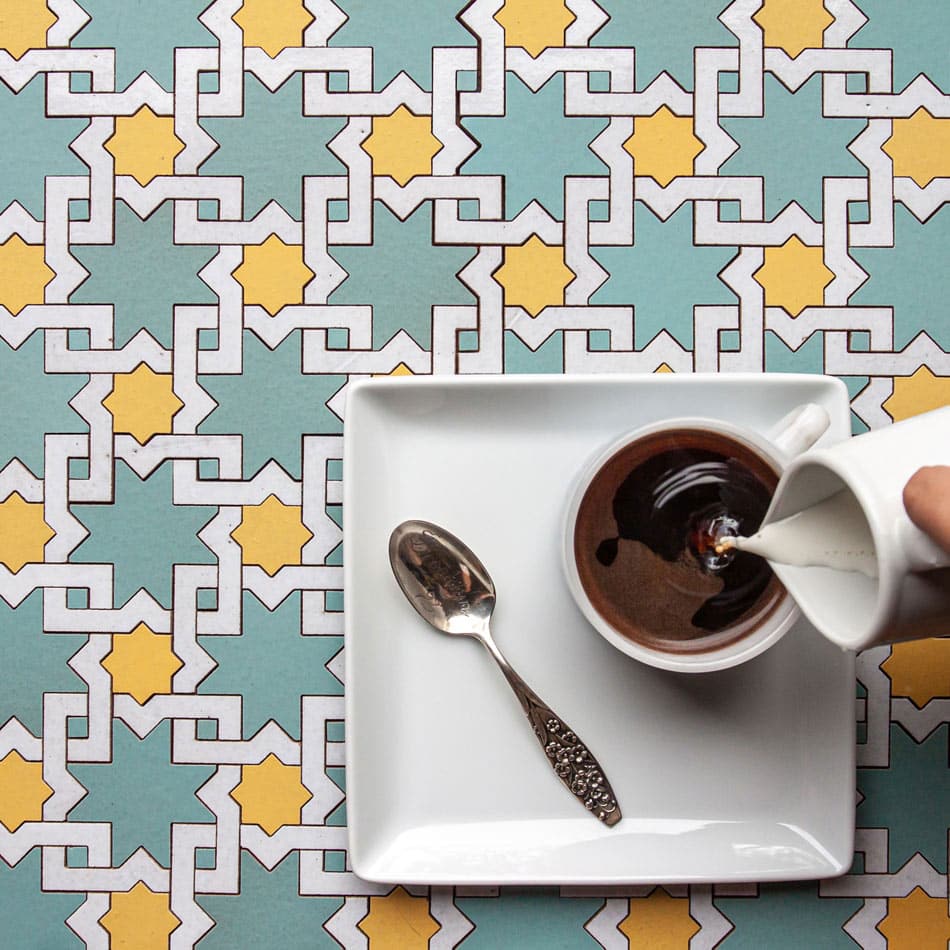
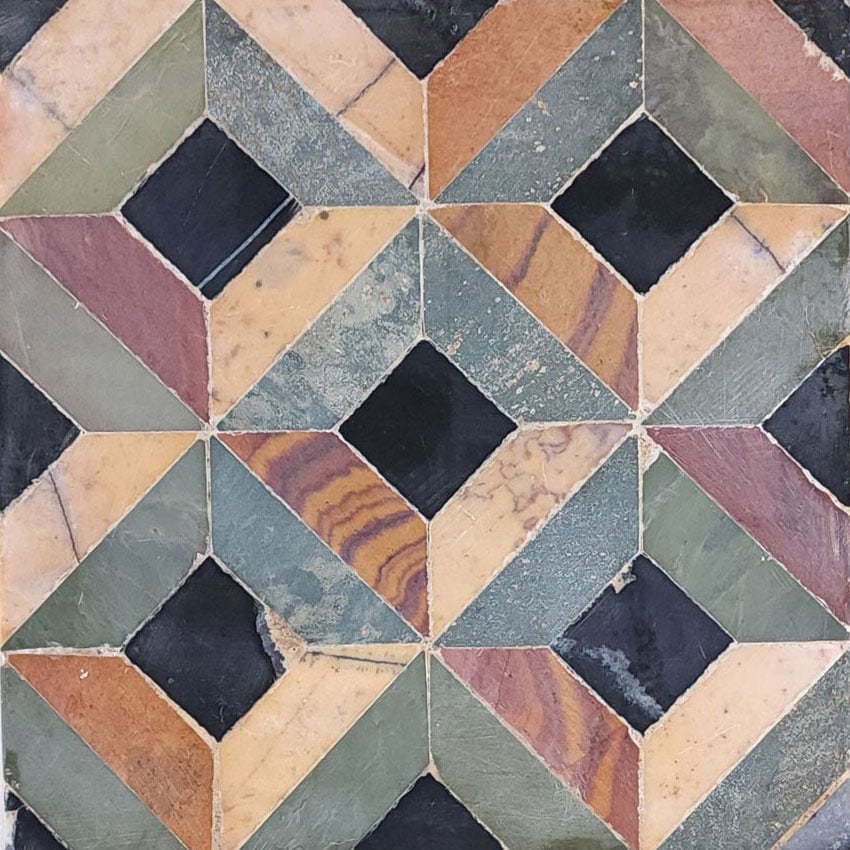
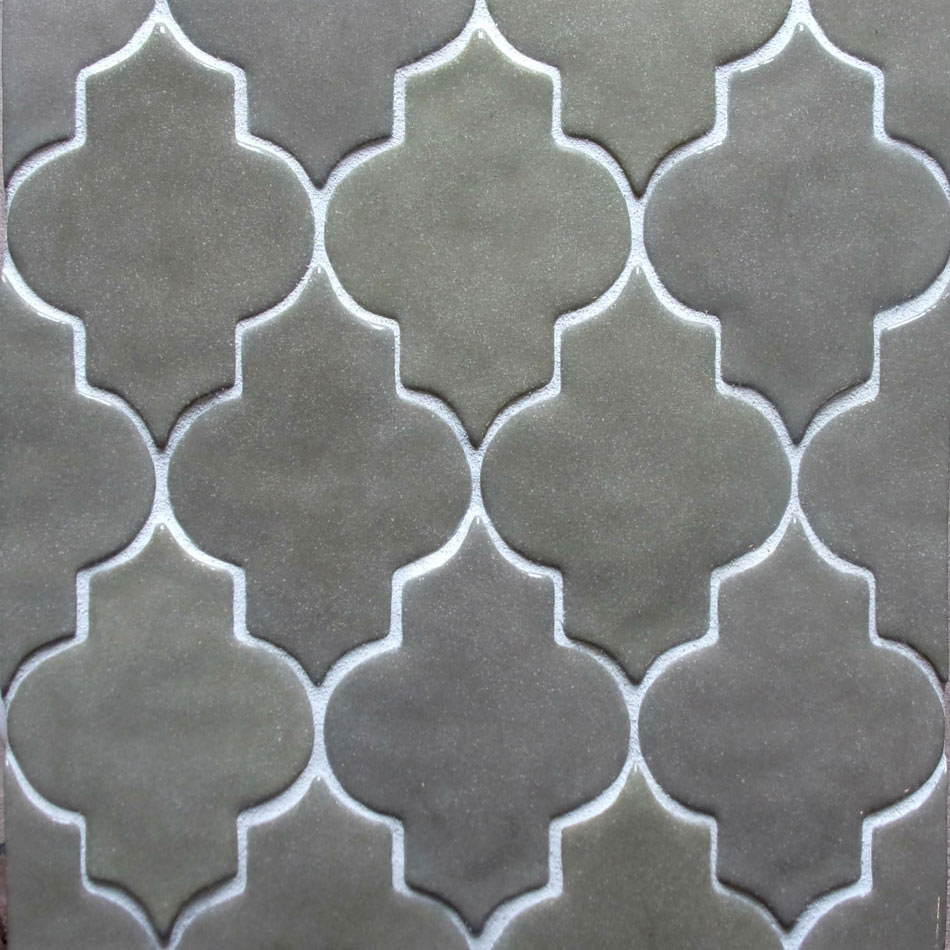
Tile Tips: How To Design With Modern Islamic Tile
Islamic tile equally rewards both bold and delicate designers. It works as a single accent panel, while it also can command a full-room installation. Here’s how to bring these looks into a 21st-century space.
Match the Tradition to the Space
This is the most useful design decision to make:
- Zellige’s irregular surface diffuses light beautifully in wet spaces, while its natural topography resists glare and slip. It pairs well with pools, steam rooms, and backsplashes.
- Iznik tile’s flat, brushed surface is lovely as art in place. This makes it ideal for accent walls and fireplace surrounds where you want tableau rather than texture.
- Persian girih patterns, with their visual movement, work well as flooring. The geometry of the design unfolds as you move rather than competing with eye-level decor.
- Andalusian azulejo, due to its cooler palette and repetition, blends into today’s residential interiors. The room doesn’t have to reorganize itself around it.
Pro tips. Neo-zellige’s surface makes a powder room or small bathroom feel soft and layered. For a fireplace wall where you want visual drama, Iznik-style tile is your answer. Girih is unmatched for an entryway floor that rewards a second look.
Go Immersive With a Feature Wall
Islamic tile’s defining structural strength is its infinite repeat, and the pattern is built for scale. Give it an entire wall. Let the geometry do what it was designed to do: pull you in.
In a bathroom or living room, a floor-to-ceiling installation becomes the room’s heartbeat.
Pro tips. Choose one wall and keep the others muted and neutral. The feature wall needs breathing room. For a contemporary edge, pair an ornate mosaic with minimalist furnishings.
Channel the Hammam
A hammam is an Islamic bathhouse, and it’s Islamic tile’s natural habitat. A hammam is warm, steam-filled, and utterly enveloping. Bring that atmosphere to your shower or master bath.
Wrap the walls and shower floor in small-format zellige or geometric mosaic. Add an arched niche, and the transformation is complete.
Pro tips. For grout in wet spaces, choose a tone close to the tile’s deepest color. It unifies the mosaic instead of sectioning it. A curved niche or steam shower enclosure makes the hammam connection explicit.
Treat It Like Jewelry
You don’t necessarily need a full room. One panel, niche, or course of new Islamic tile design dramatically transforms a space. Imagine it the way a jeweler thinks about a centerpiece stone: Placement is everything.
Pro tips. Frame a bathroom mirror in geometric border tile, or run a zellige strip along the base of kitchen cabinetry. Even one decorative floor inset reads as intentional luxury.
Contrast Ancient Pattern With Modern Materials
Islamic tile’s ornate geometry hits hardest against the cleanest contemporary surfaces. Pair it with concrete, matte steel, minimalist white oak, or poured resin. The design tension, ancient pattern against industrial look, crackles with energy.
Pro tips. A geometric tile backsplash paired with simple countertops is an instant focal point. In a commercial lobby, Islamic mosaic tile behind a reception desk creates an elevated composition.
Go Monochrome
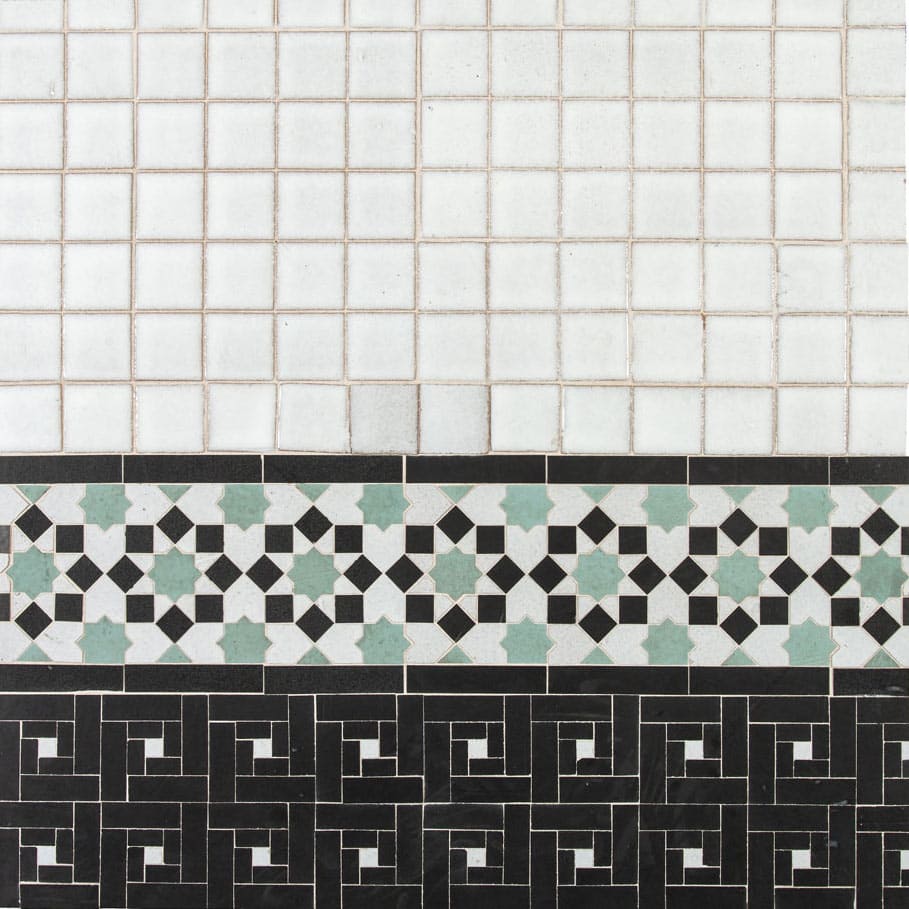
Not all modern Arabic tile arrives in multicolored fanfare. Single-color geometric tile (all white, all matte black, all terracotta) isolates the pattern as the design element: pure geometry.
Pro tips. All-white geometric tile in a bathroom amplifies light and expands the space. All-terracotta geometric tile brings earthy warmth to a kitchen or dining room. Tone-on-tone is the demure version of a statement.
[Related: 23 Random Tile Pattern Designs]
A Brief History of Islamic Tile
Islamic tile began to flourish in the 9th century. Craftspeople across the Islamic world elevated ceramic decoration to a spiritual art form.
In Morocco, the zellige tradition emerged: hand-cutting geometric tile from fired, glazed clay. It served as an expression of both religious devotion and extraordinary technical mastery.
In Persia and Central Asia, artisans developed the girih system with astounding sophistication and precision.
In Ottoman Turkey, Iznik tile artisans produced vibrant, glazed ceramics. Their signature red, cobalt, and white florals still cover mosque walls from Istanbul to Cairo.
In Andalusian Spain, Moorish craftspeople created the tilework of the Alhambra Palace in Granada. The site is arguably the most masterful decorative tile installation in the world.
These traditions share a conviction throughout ages: Beauty and mathematics coexist in design.
Today, new Islamic tile designs translate these ancient geometries into reimagined ceramic and porcelain formats. The math hasn’t changed. The rooms have.
[Related: Islamic Tile History and Inspiration]
39 Images of Islamic Tile in Modern Spaces
Heritage meets high design in these 21st-century spaces. Each proves that a centuries-old craft is still a perfect fit for a magnificent modern life.
1. Bask in Arabesque
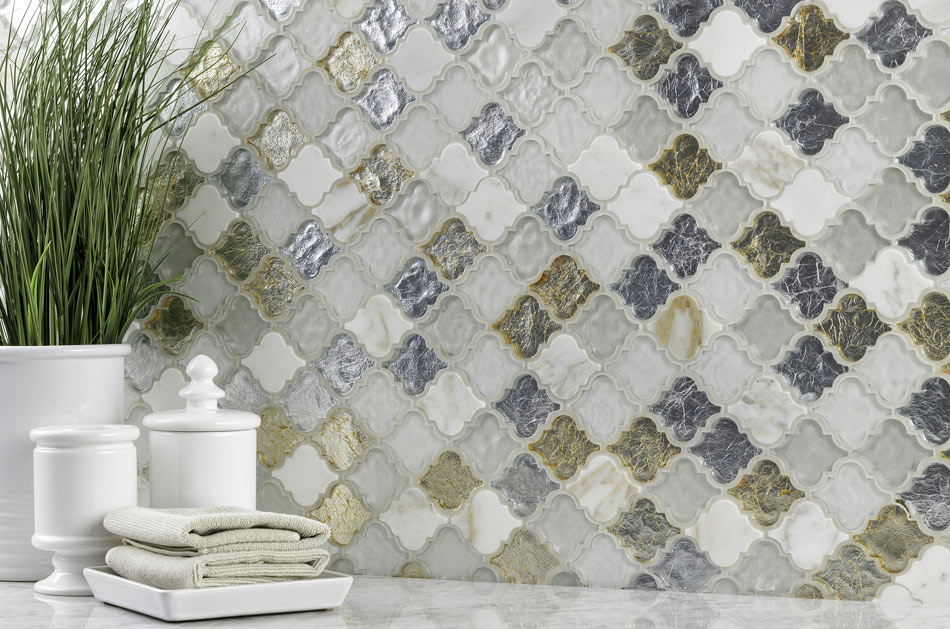
A bathroom backsplash glimmers in blue, green, gold, and white arabesque mosaic tile.
2. Dance the Blues
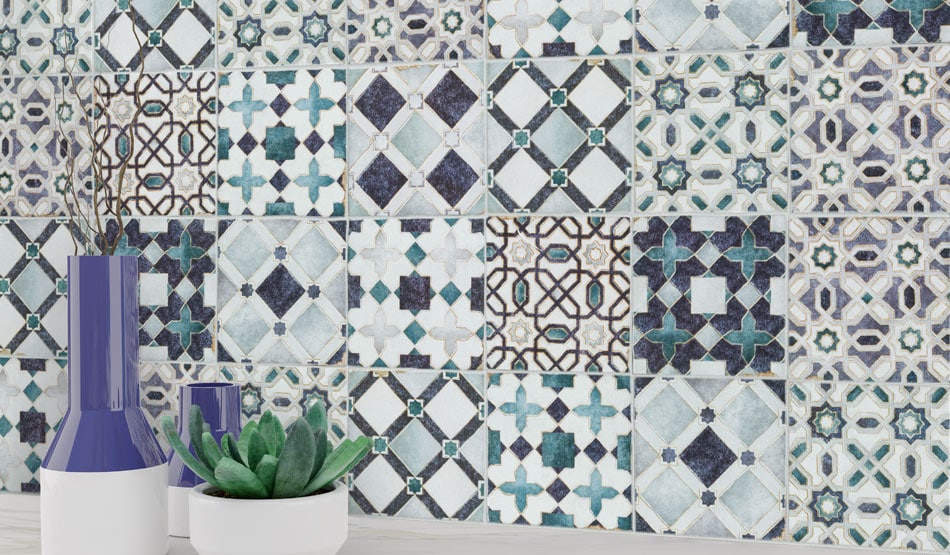
Moroccan-style tile in a random layout brings cool pizzazz to a kitchen backsplash.
3. Modern Monochrome
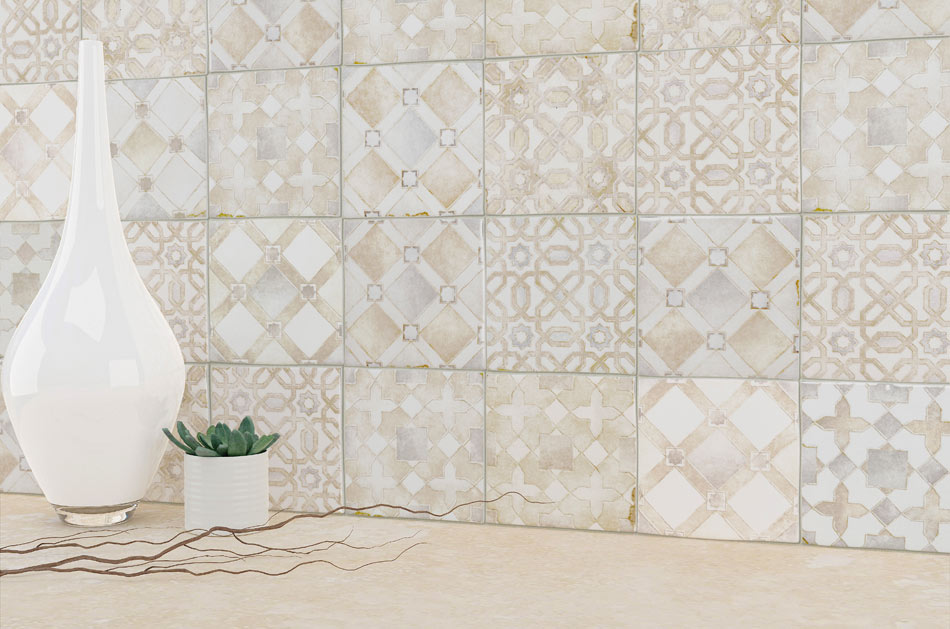
A backsplash boasts a twist on modern Islamic tile, trading bold color for soothing neutral hues.
4. To the Night Market
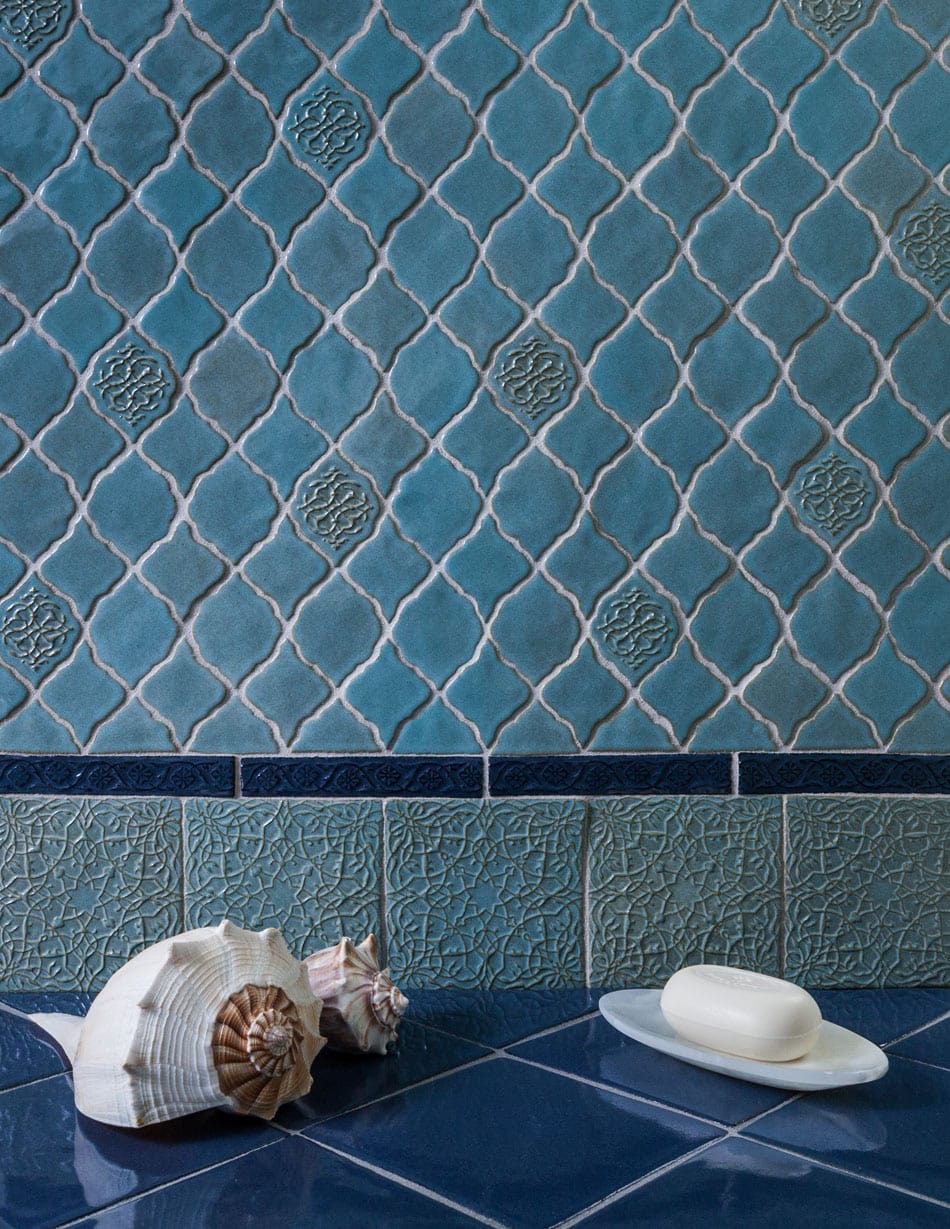
Stamped and arabesque Arabic tile brings Marrakesh markets to a backsplash in peacock blues.
5. Sketching Spruce
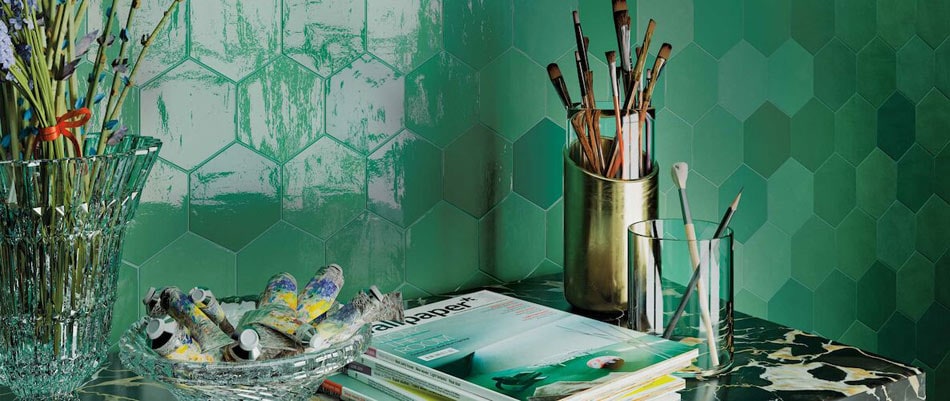
A hex mosaic of neo-zellige tile in greens undulating across the wall offers a stunning take on Islamic design.
6. Cooking in Cools
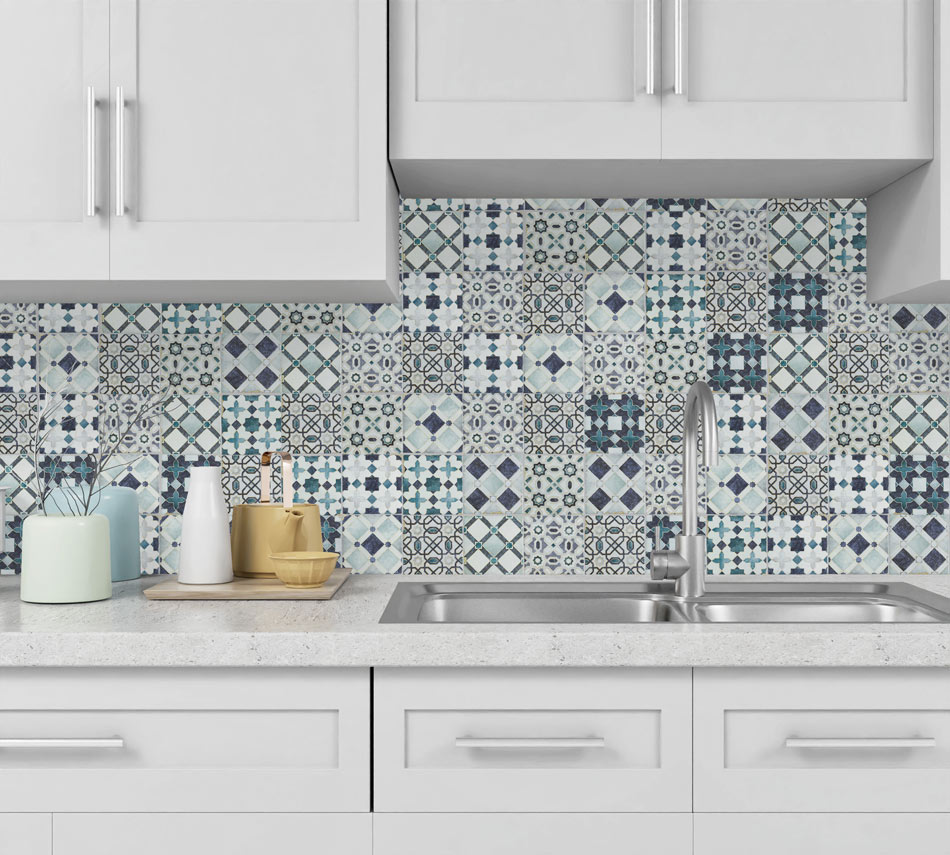
A Moroccan-inspired tile mosaic balances homespun with historical on a kitchen backsplash.
7. Baby Blue
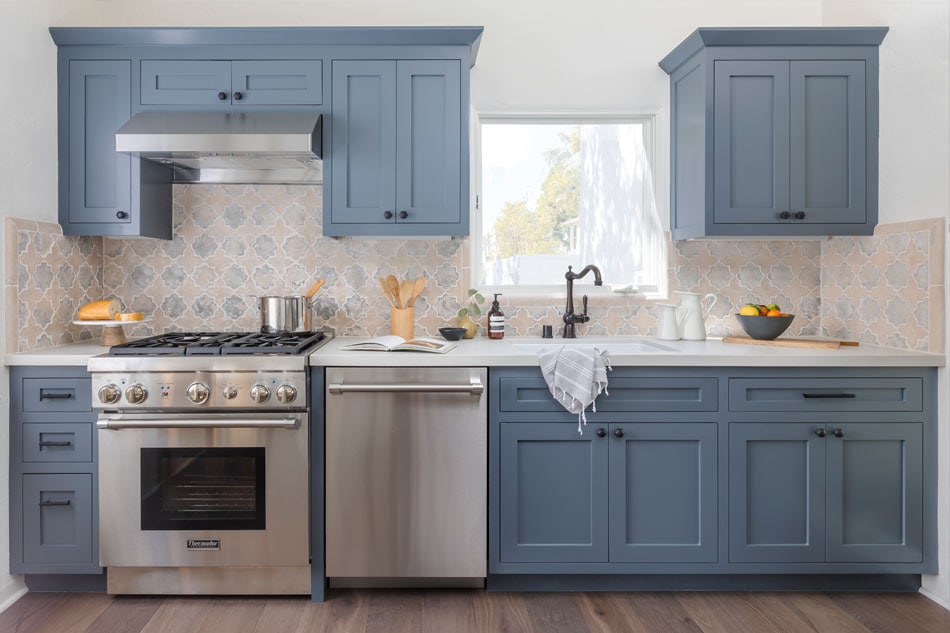
Rosy beige and dusky blue arabesques hearken to Islamic tile fundamentals in a modern kitchen.
8. Find Your Center
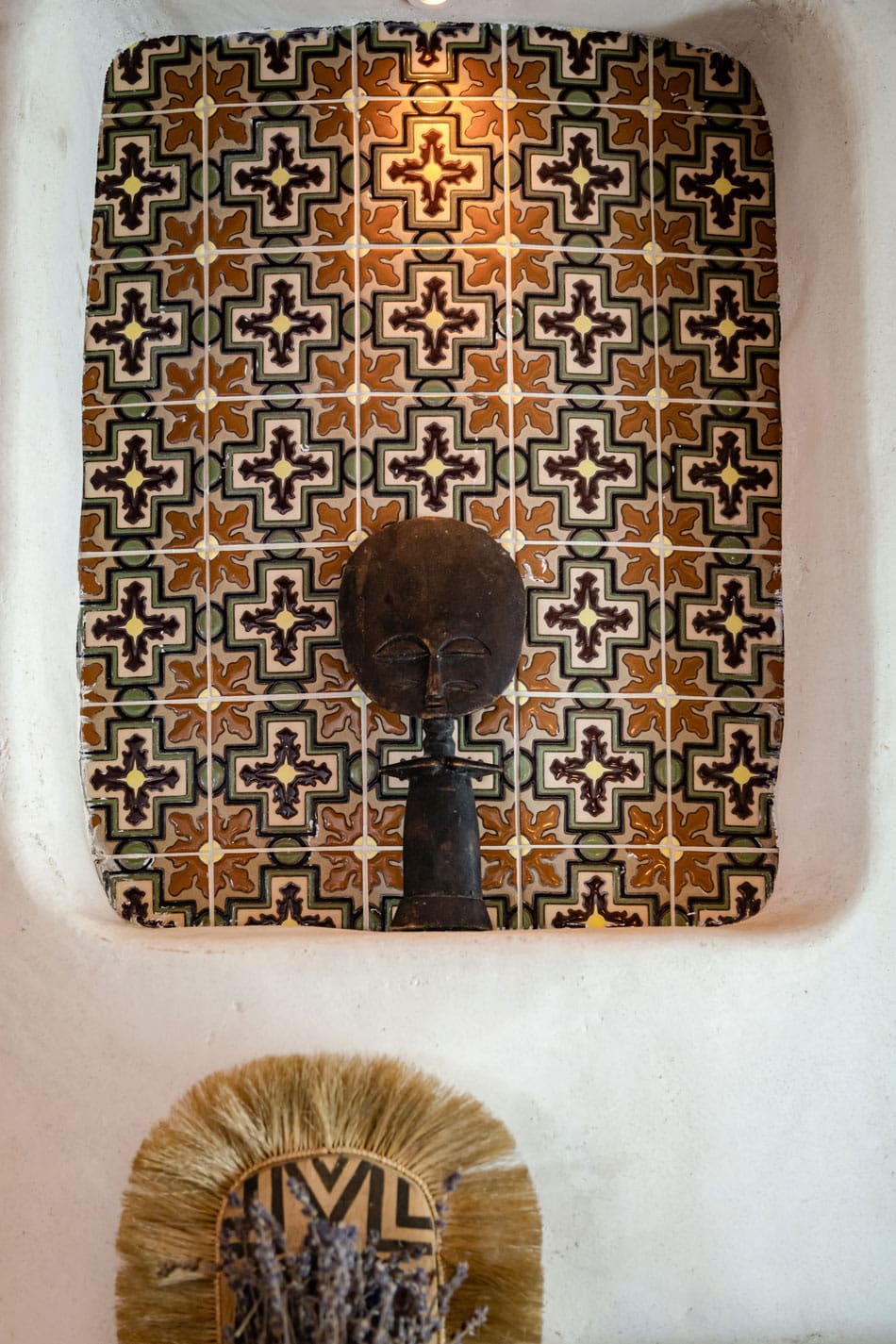
A curved niche shelf pairs modern earth-toned Arabic tile with Ghanaian figures.
9. Dirty Martini
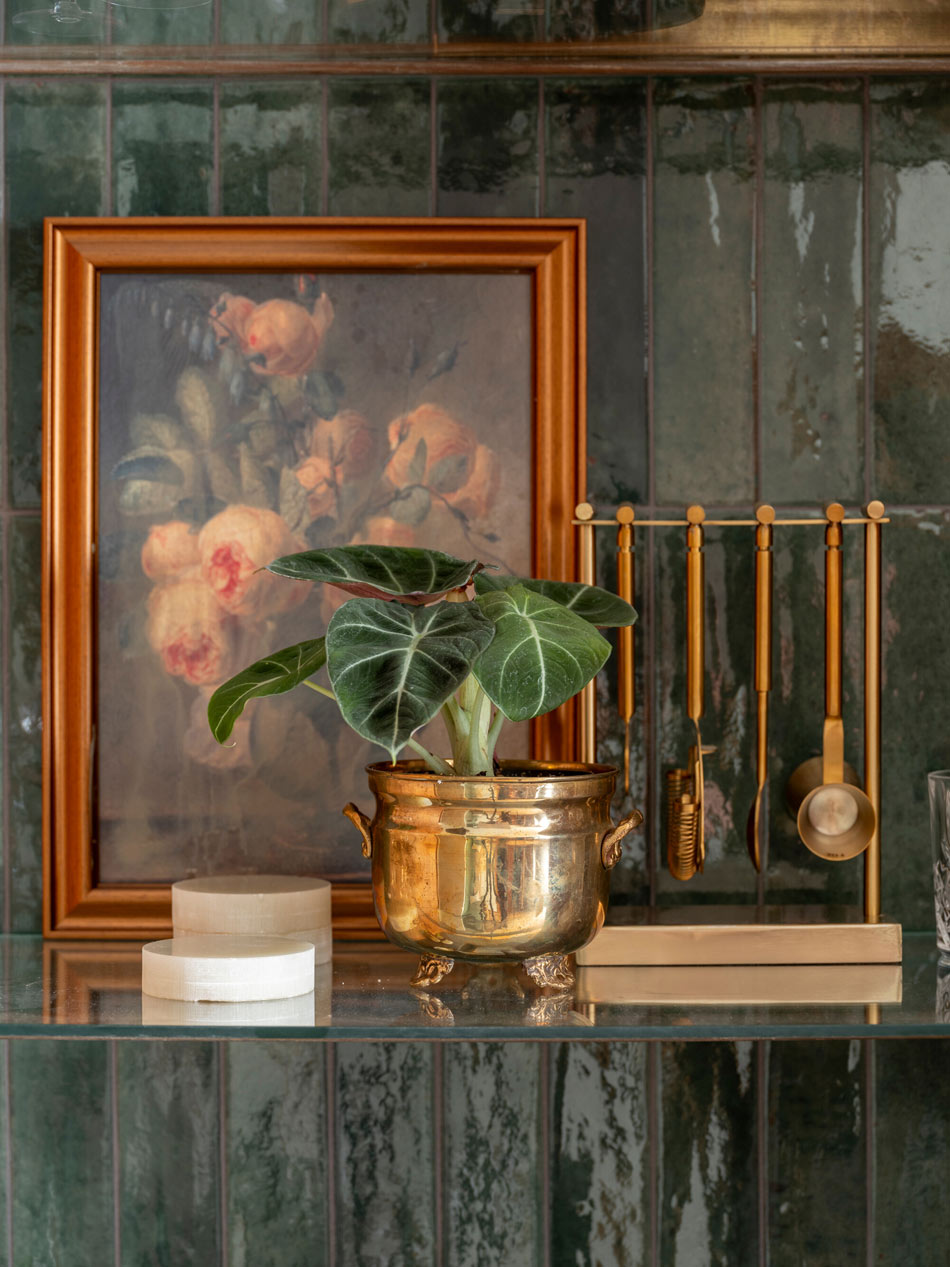
Deep emerald neo-zellige tile is right at home in a contemporary kitchen, gracing a dry bar.
10. First Place
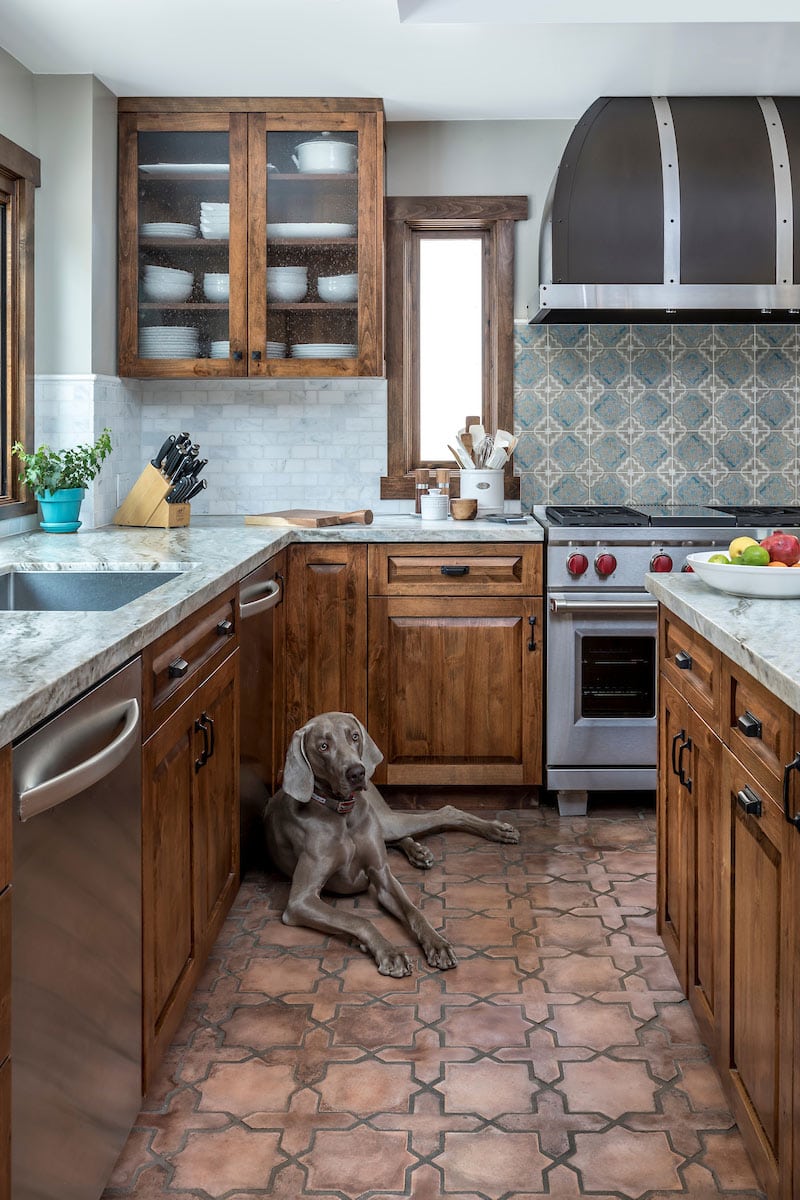
Aquamarine medallions and terracotta tiles straight from classic Islamic tile influences adorn a range backsplash and kitchen floor.
11. Out of the Blue
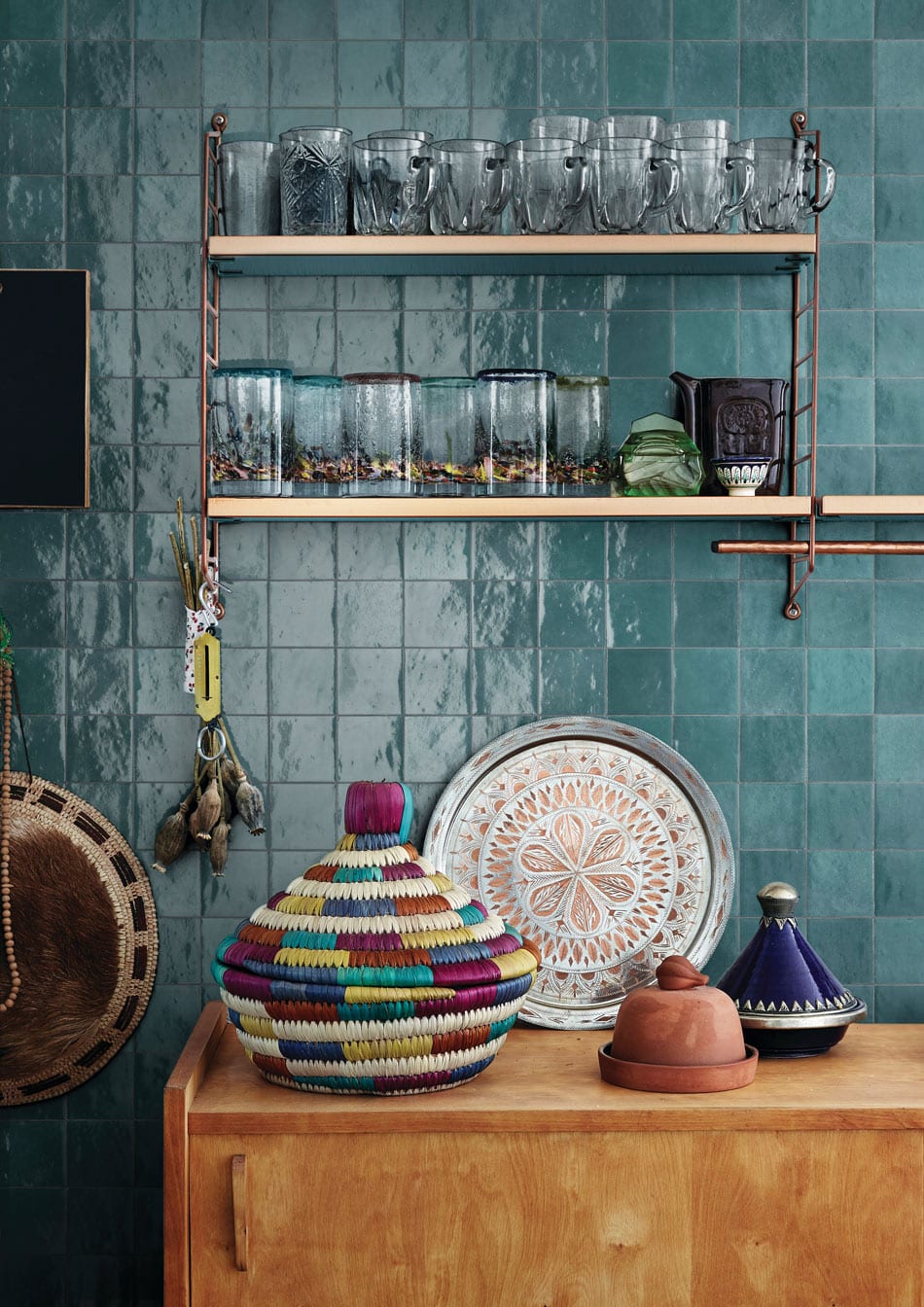
Neo-zellige tile shimmers in multitoned teal on a kitchen wall, catching and diffusing sunlight.
12. Home on the Range
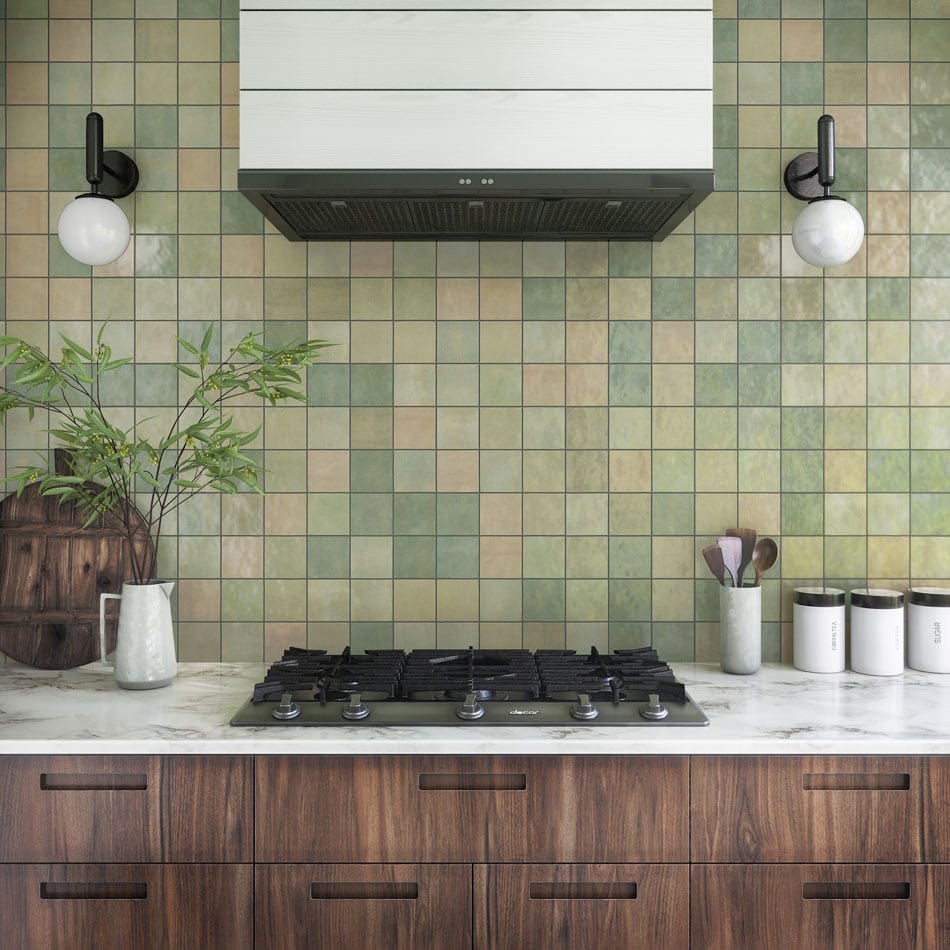
A grid of neo-zellige tile draws on Islamic inspiration in grassy greens and yellows atop a stove backsplash.
13. Sunny Side Up
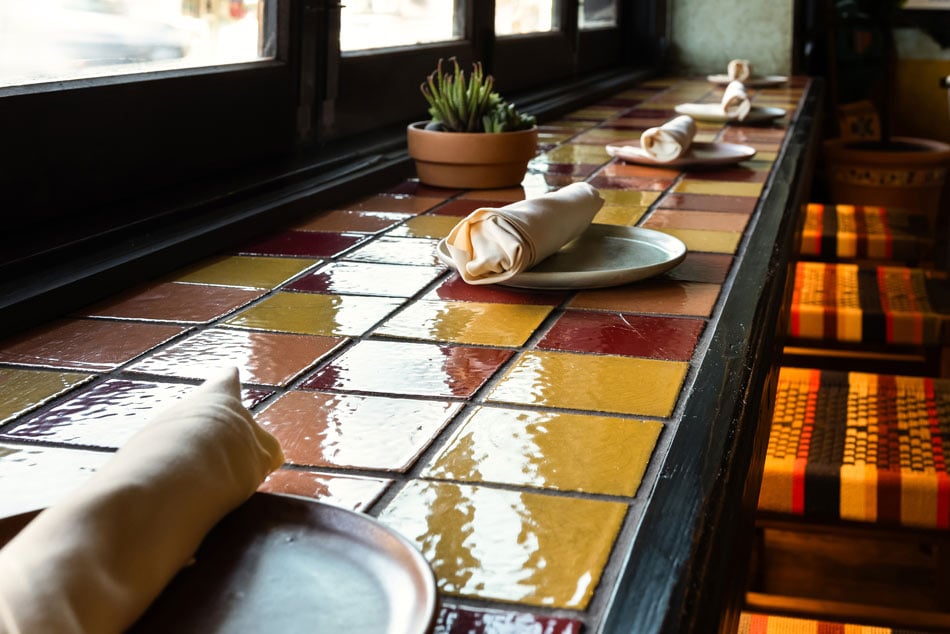
A restaurant splashes mango and ruby neo-zellige tile across a countertop, putting a hip spin on classic Arabic design.
14. Going Up
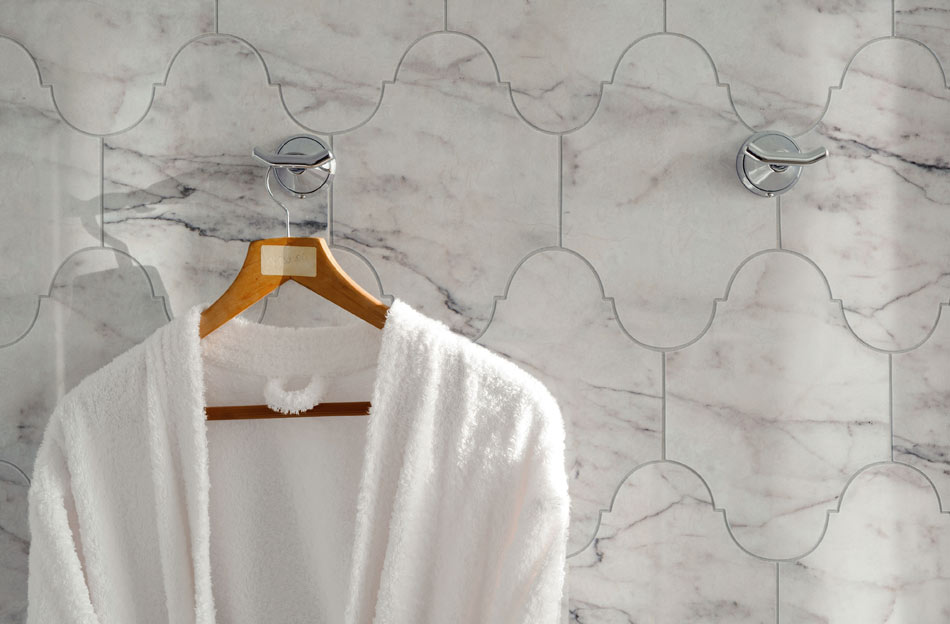
White marble-look tile beams in airy arabesques, an innovative interpretation of classic Islamic tile in the bath.
15. Double Down
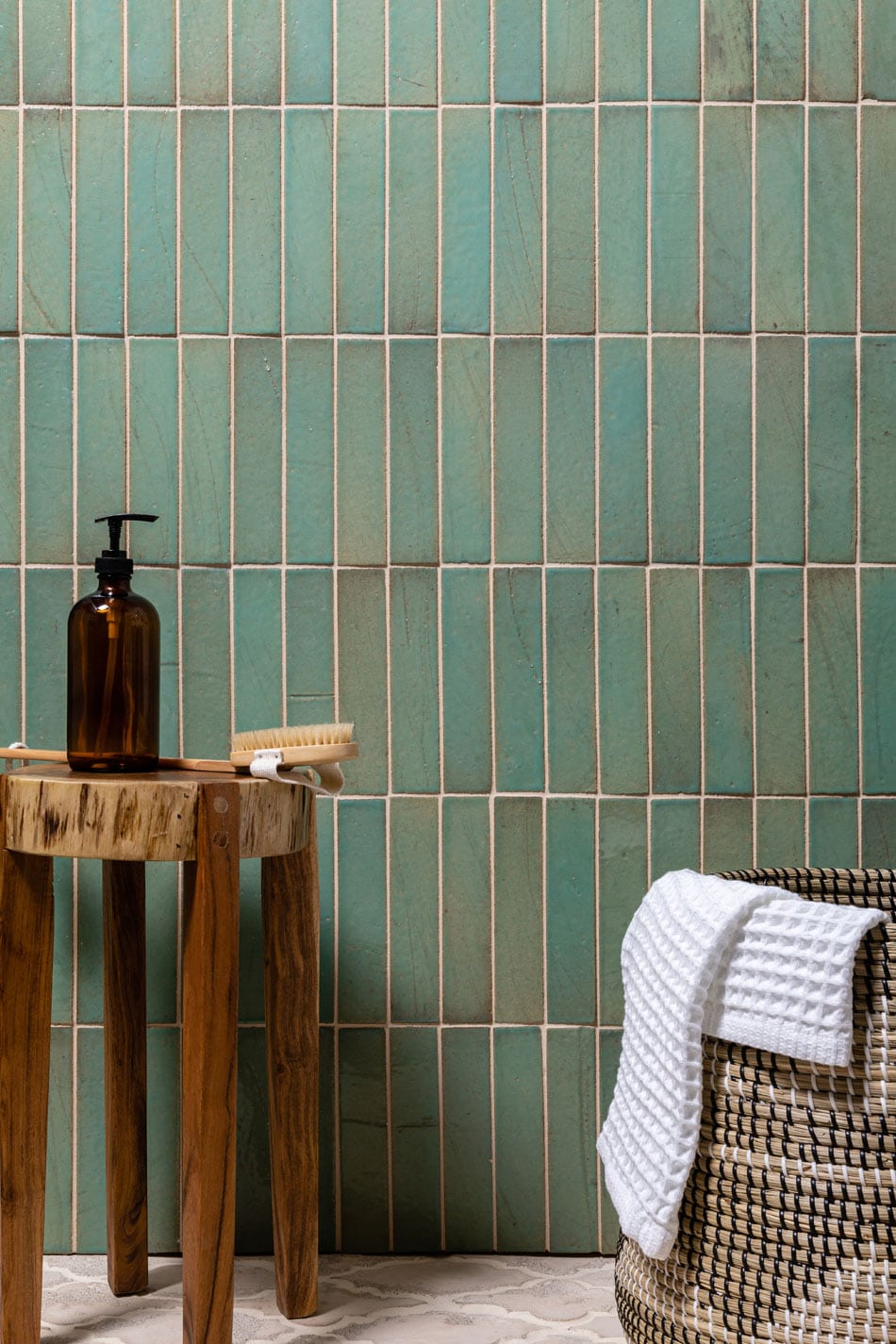
Sculpted neo-zellige tile elongates a bathroom wall in variegated sage, while limestone-look tile dons the floor with arabesques.
16. A Matter of Course
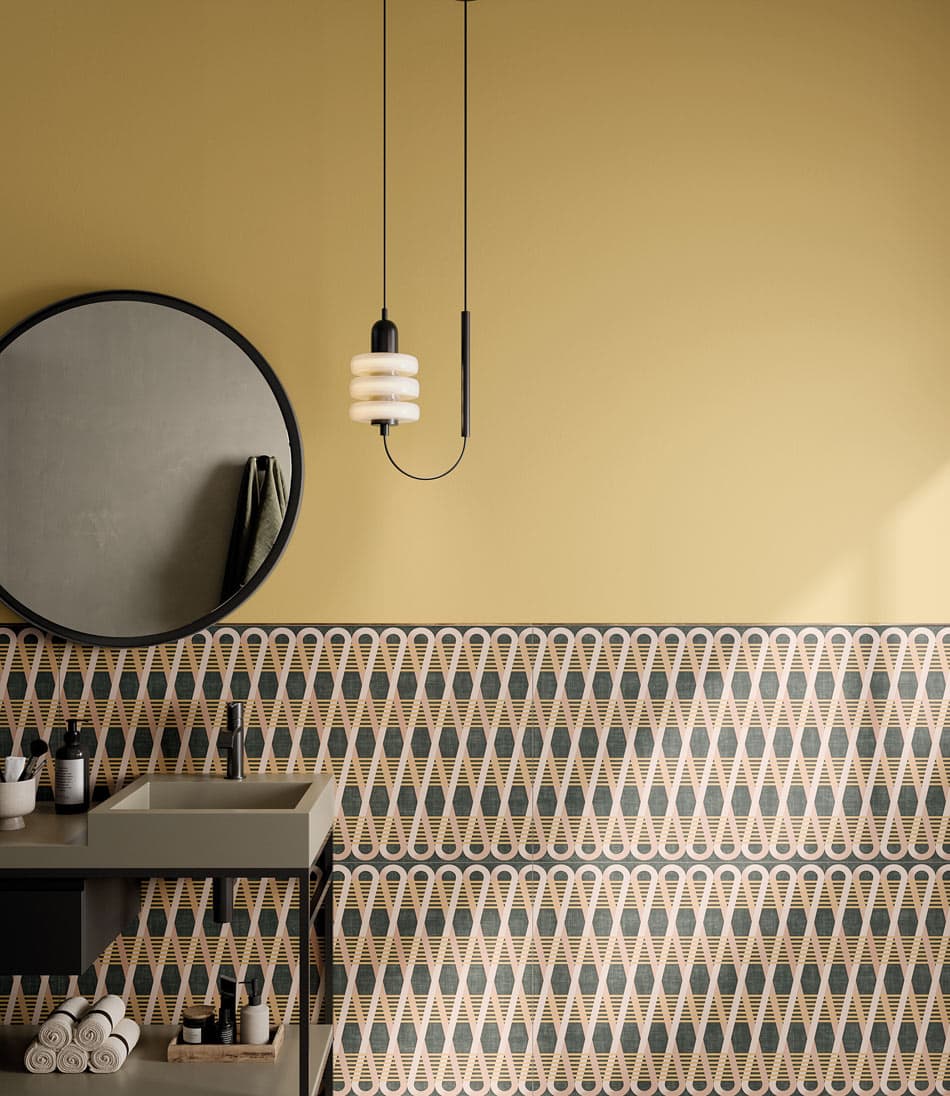
Geometric twists recall Moroccan tile precision (with a touch of retro) in pale yellow and forest green across a bathroom backsplash wall.
17. Seeing Stars
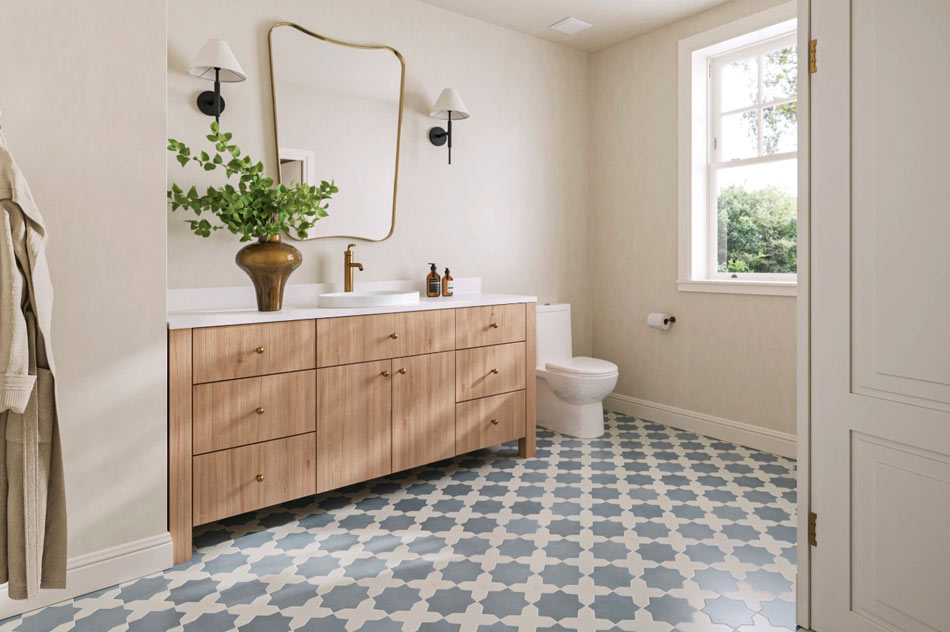
A bathroom floor boasts dusky blue star-and-cross patterned tile, a restrained modern interpretation of Islamic design.
18. Ochre and Umber
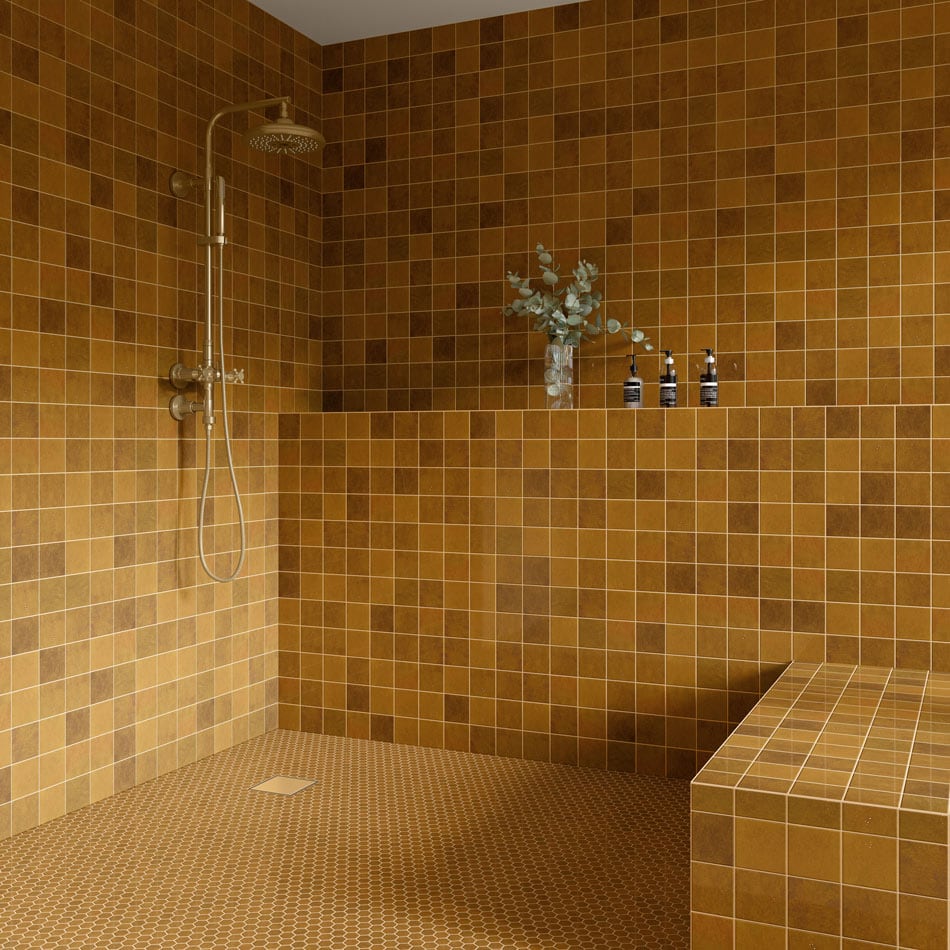
A walk-in shower beams in saffron neo-zellige tile on the walls, shelf, and bench, as a hex mosaic dapples the floor.
19. In With the Old
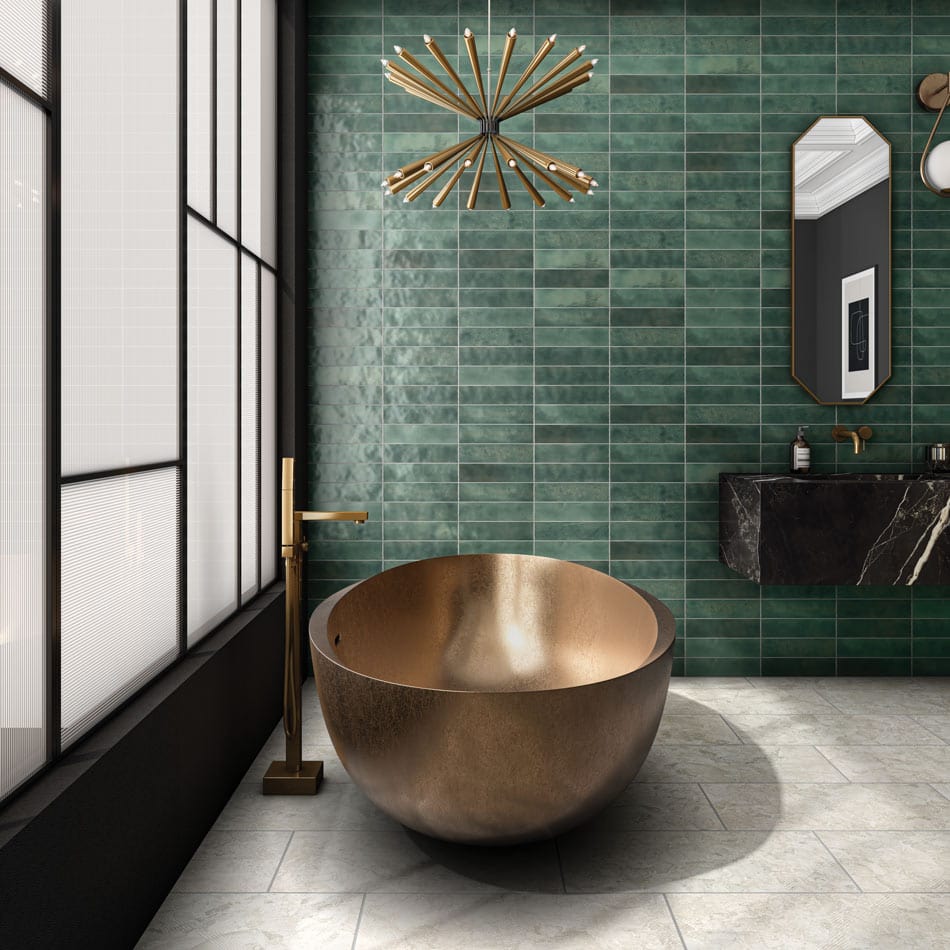
Slim, textured neo-zellige in calm greens beckons on a bathroom wall: a pairing of Islamic tile precision and 21st century simplicity.
20. Waterspouts
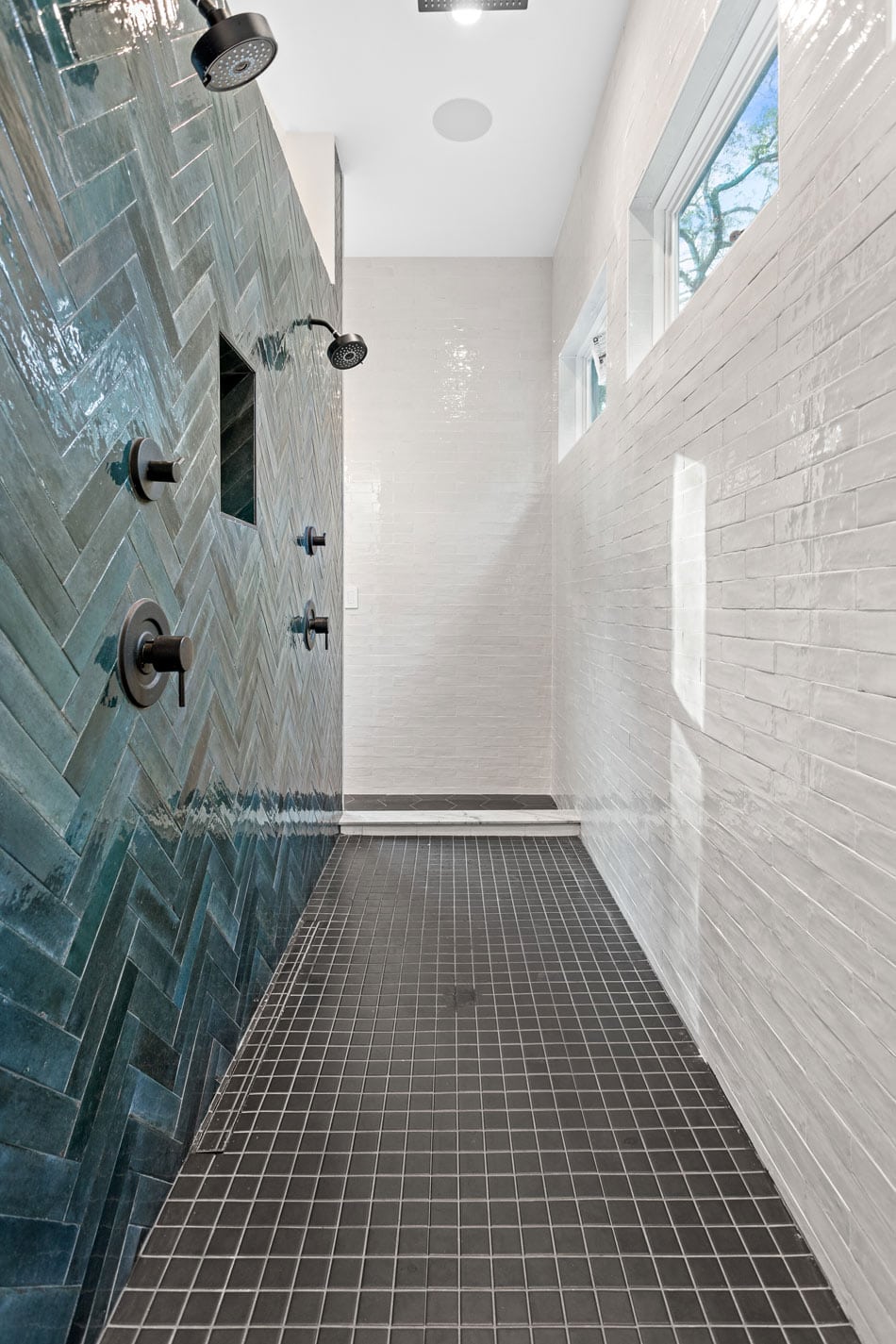
An open-concept shower stuns in oceanic blue neo-zellige tile. Its herringbone angles and handmade feel are contemporary tributes to Islamic tile principles.
21. Learning Curves
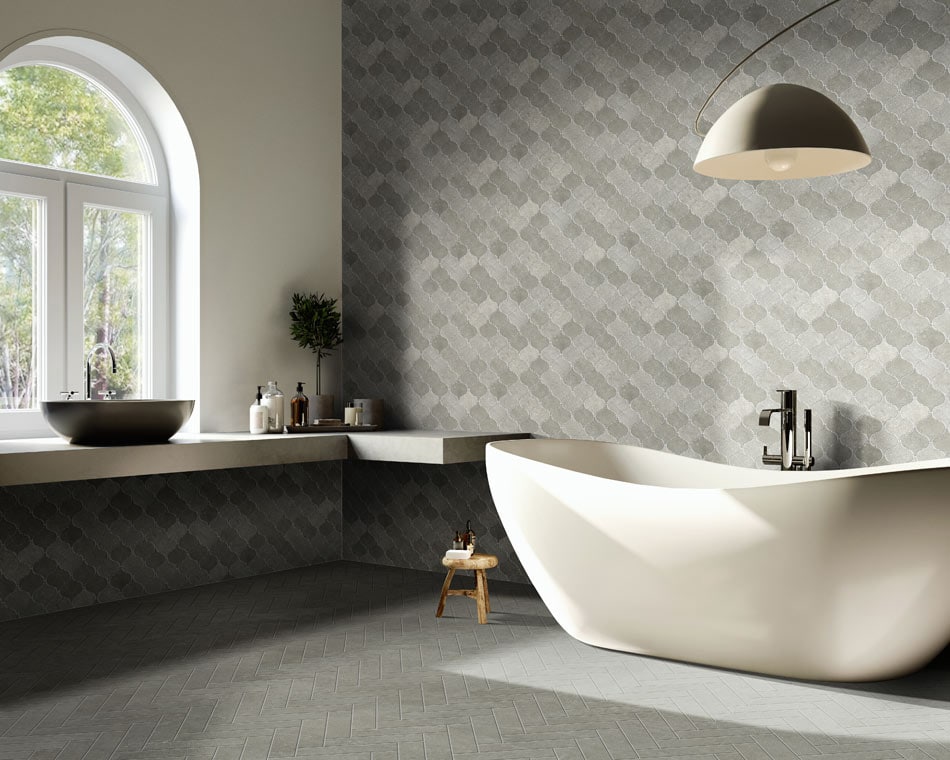
An arabesque mosaic pays homage to Arabic design in gray stone-look tile on a modern bathroom wall, minimalist and elegant.
22. Rinse and Recoup
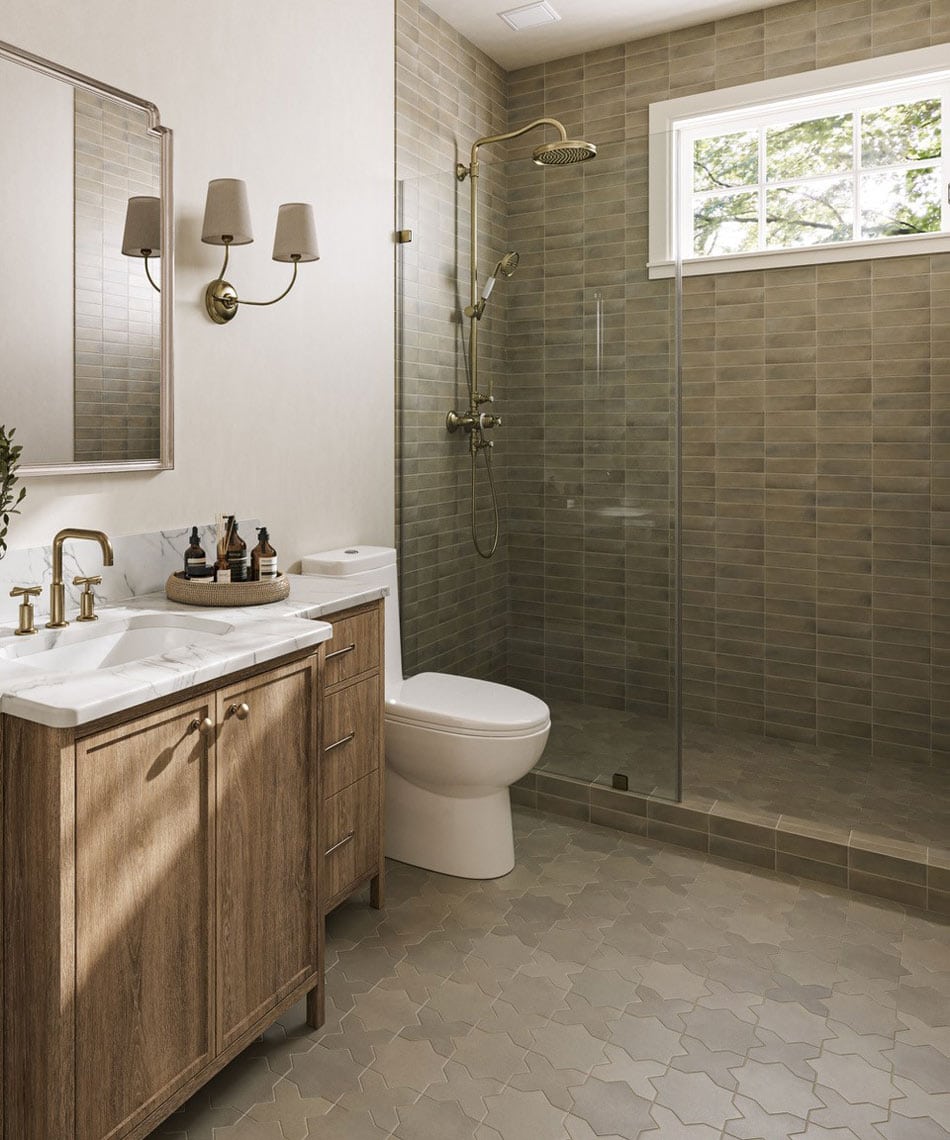
A small bathroom embraces muted Moroccan design with natural-toned star-and-cross floor tile and a neo-zellige shower wall.
23. 97% Cacao
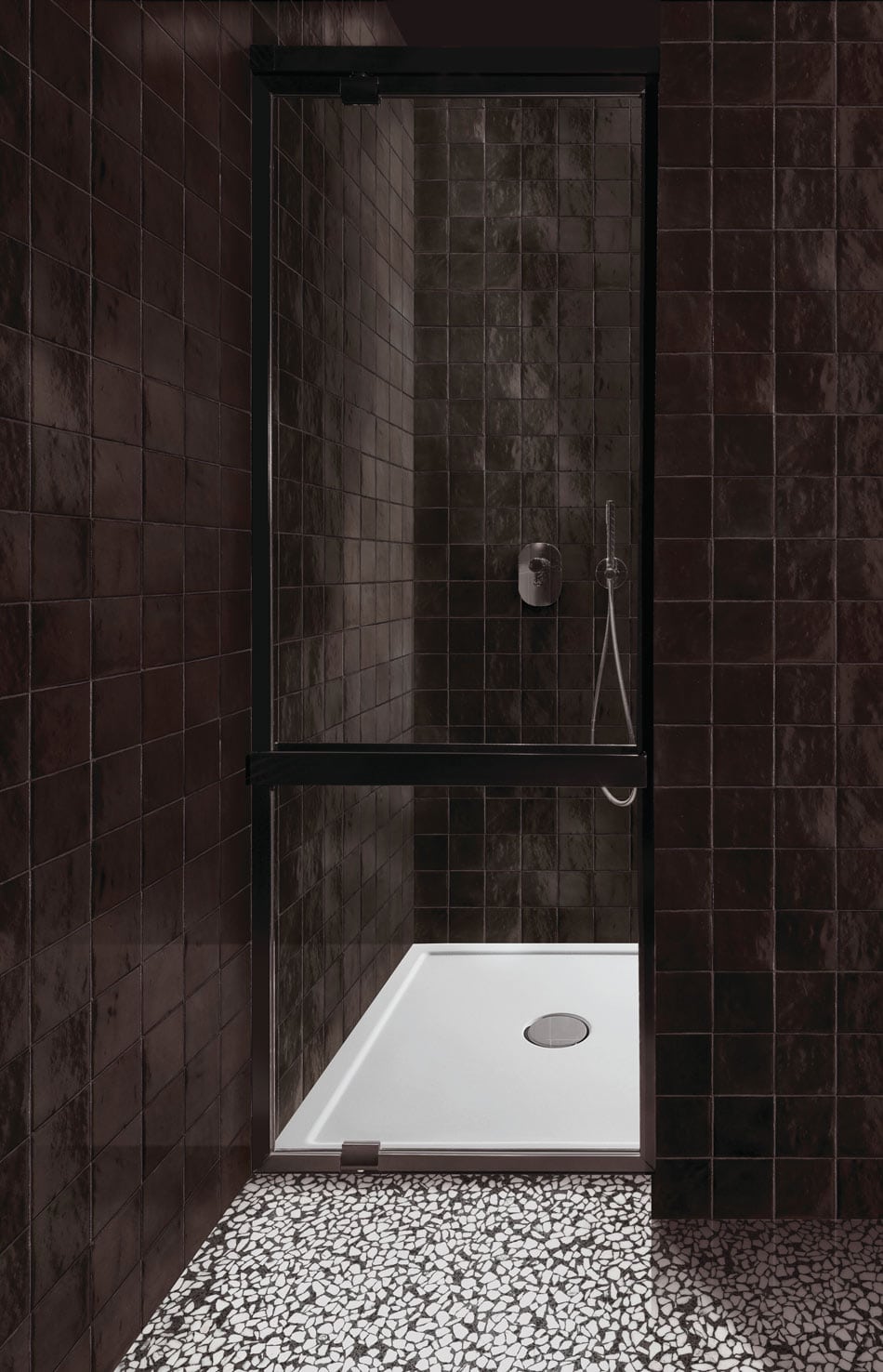
The ultra-modern and ancient Islamic meet in sumptuous dark-chocolate neo-zellige tile across a walk-in shower.
24. Who Holds the Key
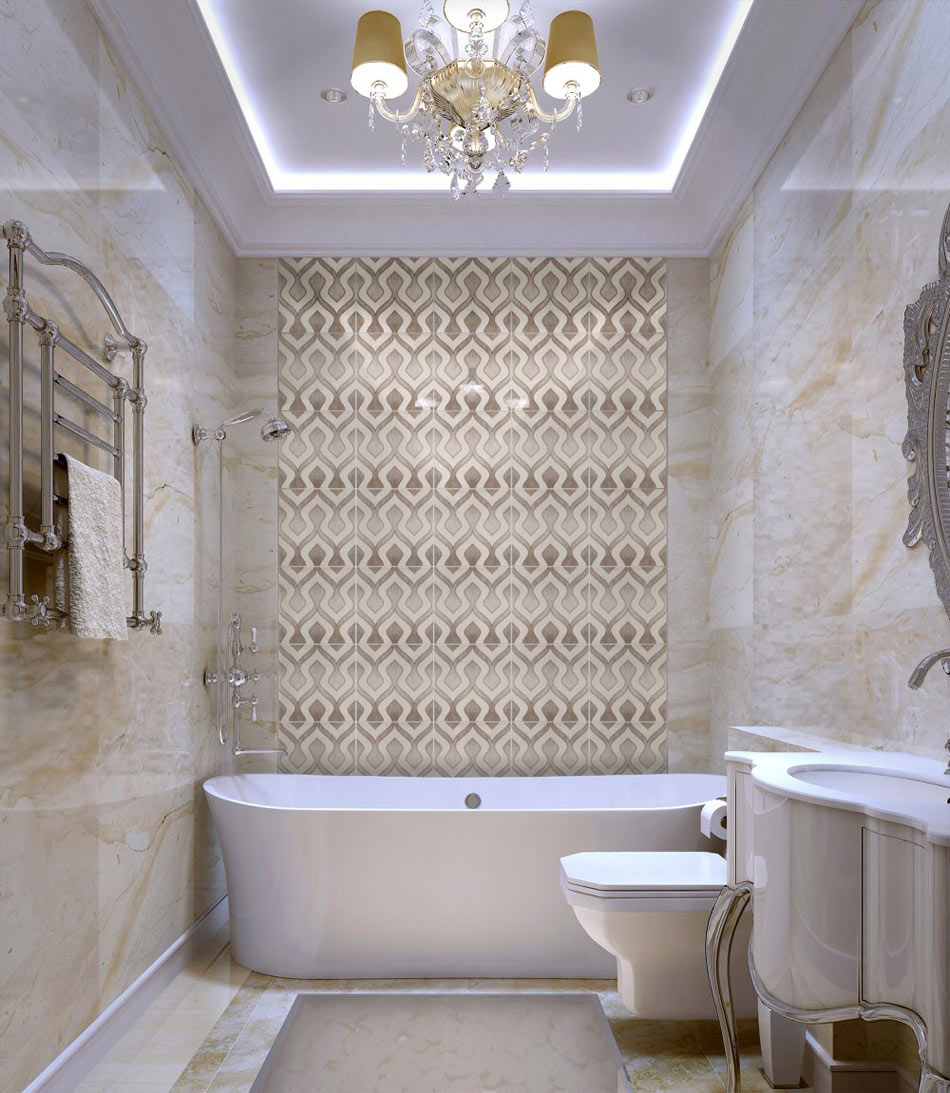
Interconnected arabesques (ogees) swirl in posh neutrals on a bathroom’s feature wall. It’s a Moroccan-style centerpiece amid luxe marble-look tile streaked with gold.
25. Chats and Pats
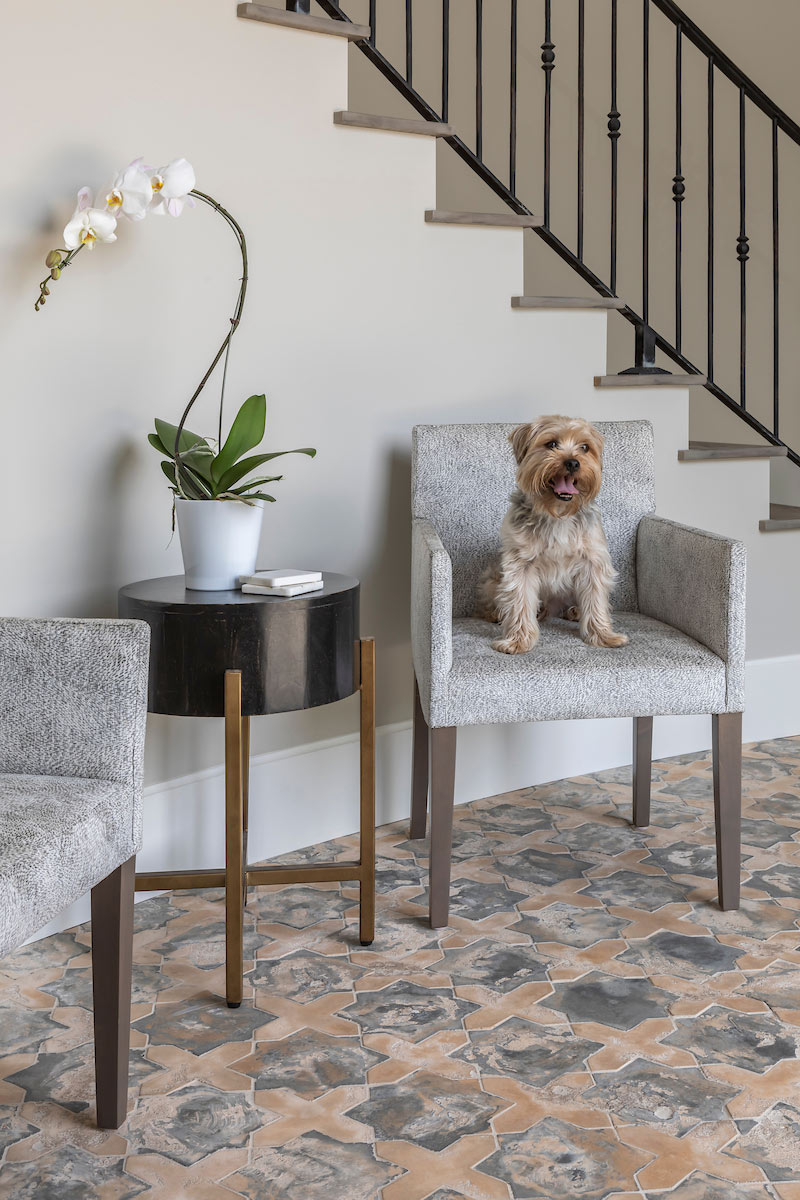
Cut gray stone-look tile arabesques mark a foyer floor, marrying Islamic tile design elements and an earthy Western palette.
26. Diamond Mine
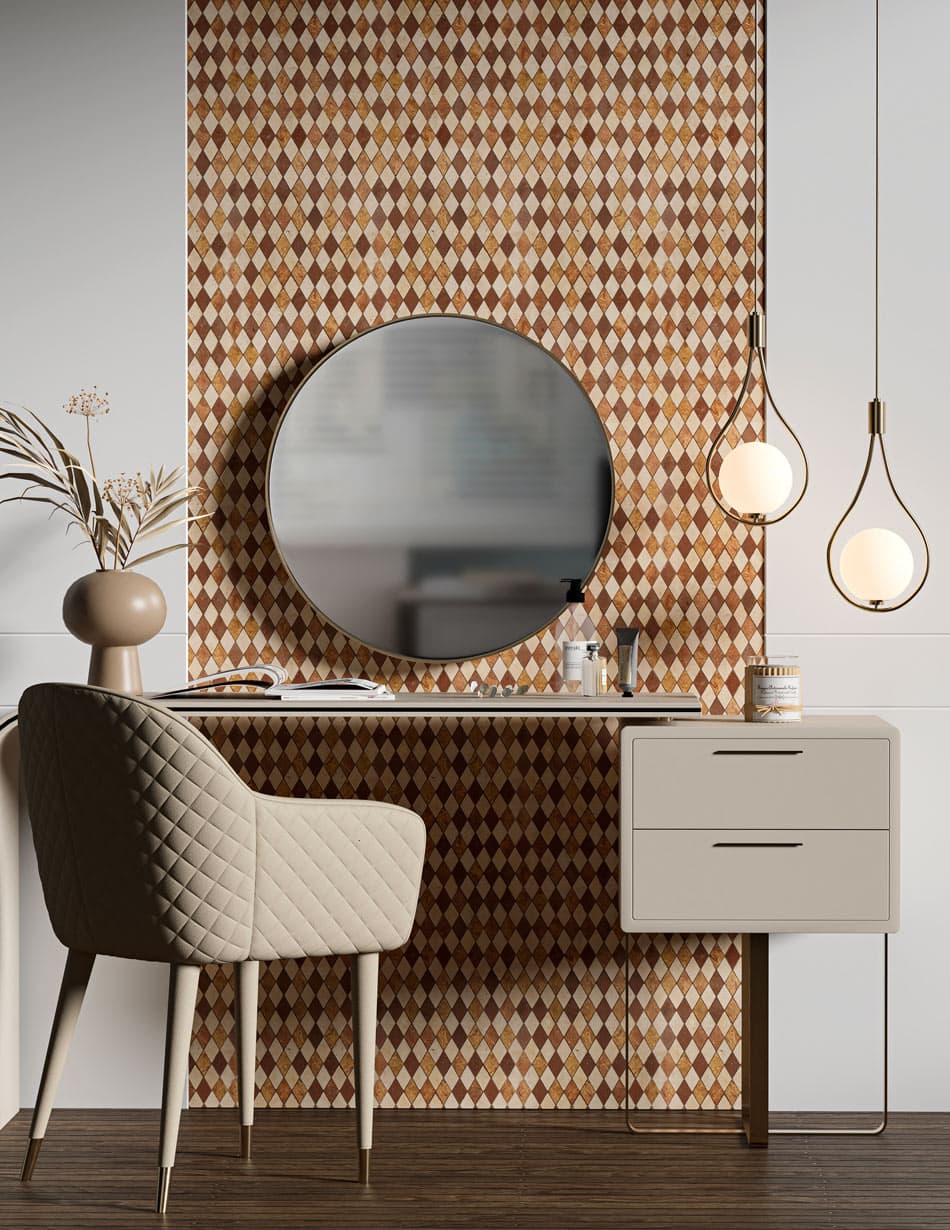
A home office feature wall sports a minute diamond mosaic that beckons to Arabic tile complexity.
27. The Good Life
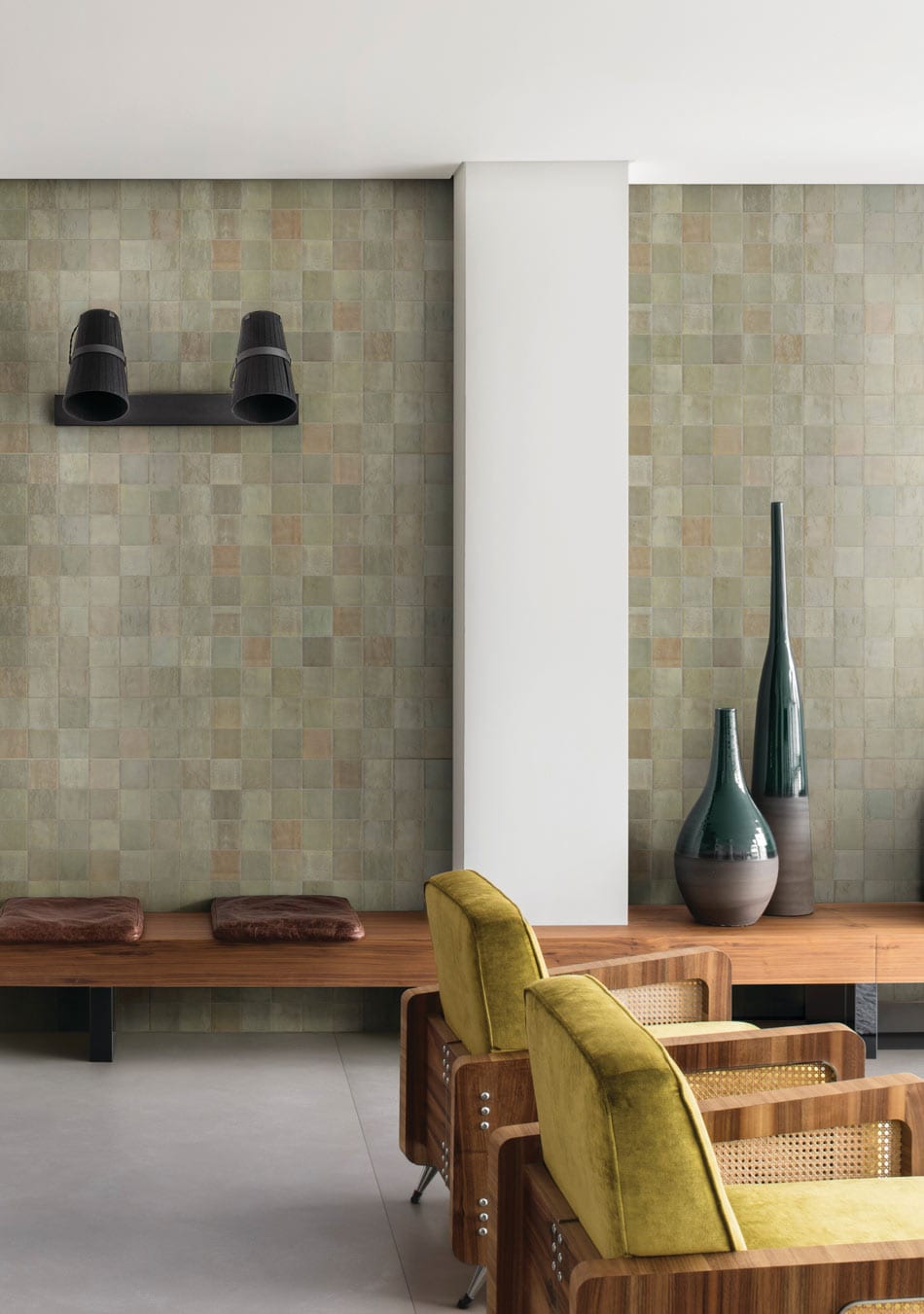
Islamic tile influence meets mid-century modern design in this living room, a neo-zellige grid blanketing the wall in pastel grays, beiges, and greens.
28. Seville to Persepolis
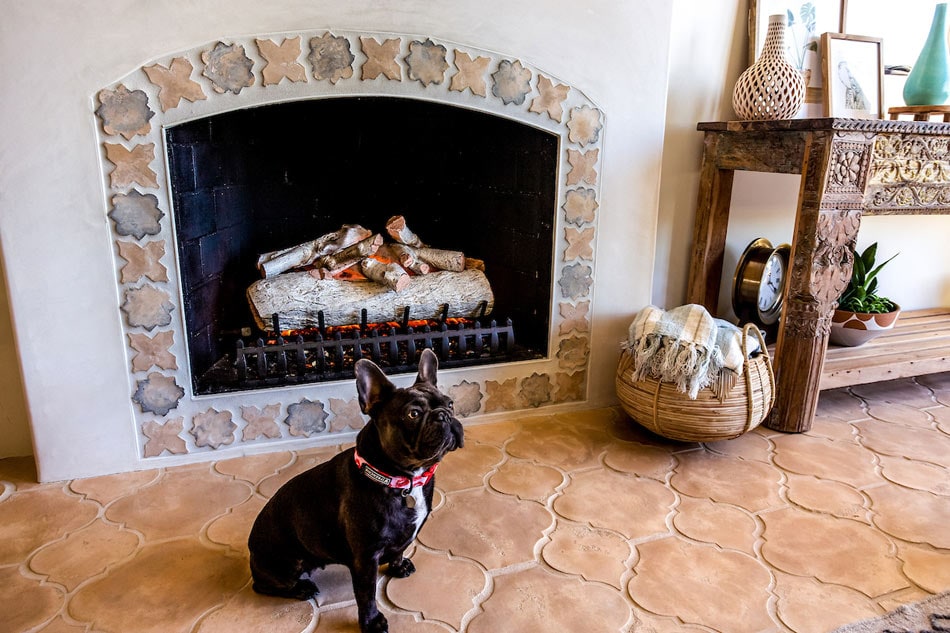
A living room floor and fireplace surround glow in terracotta-look tile arabesques, stars, and crosses, a subtle callout to the Spanish–Islamic connection.
29. Sandman
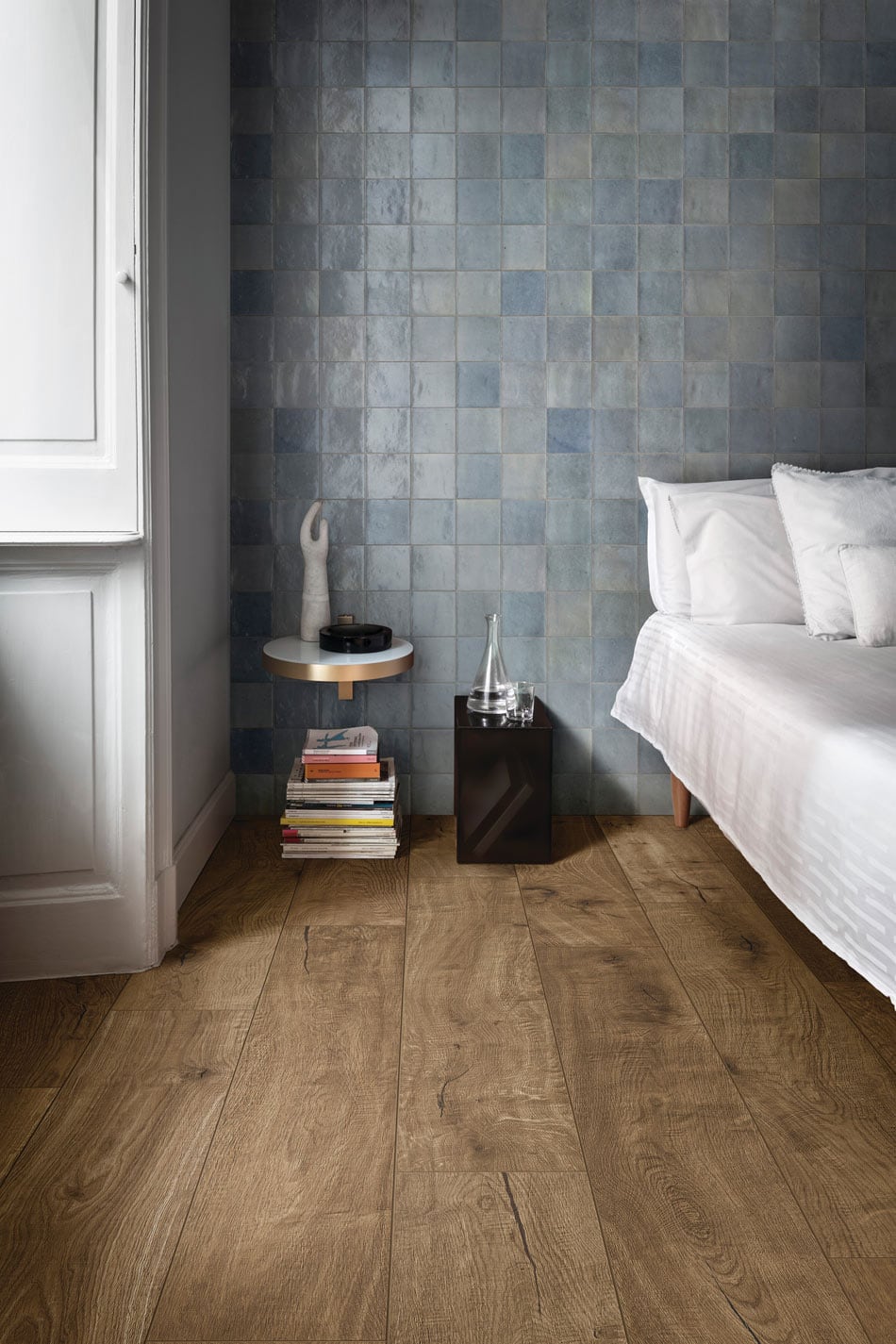
Pale blue neo-zellige tile is a subtle callout to artisan azulejo tones on this modern bedroom wall.
30. Rustic Recollections
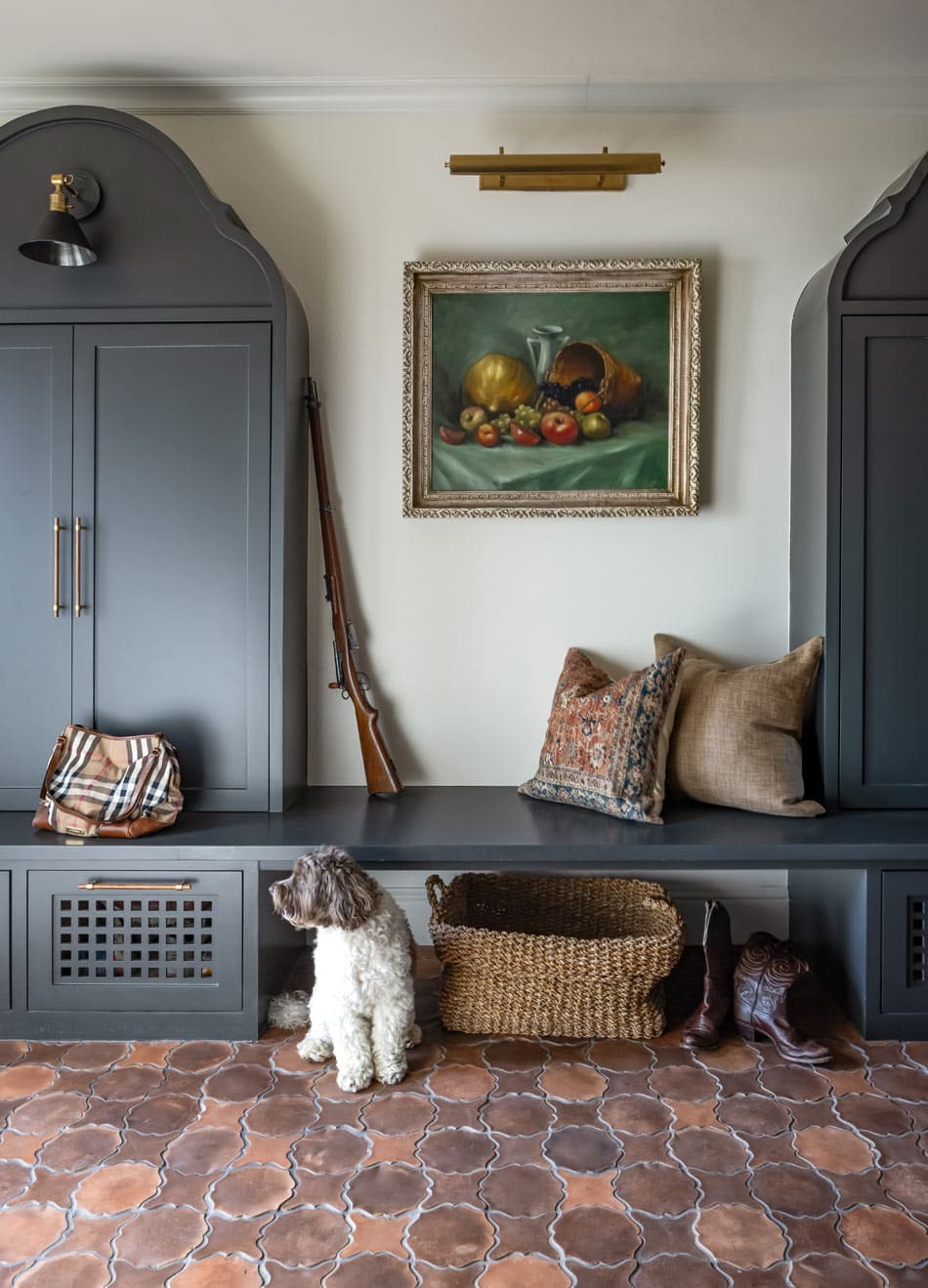
Deep-set terracotta-look tile arabesques and stars stamp a mudroom floor with understated Arabic influence. It’s a testament to its versatility: homespun, elevated, and timeless.
31. Pampered and Powdered
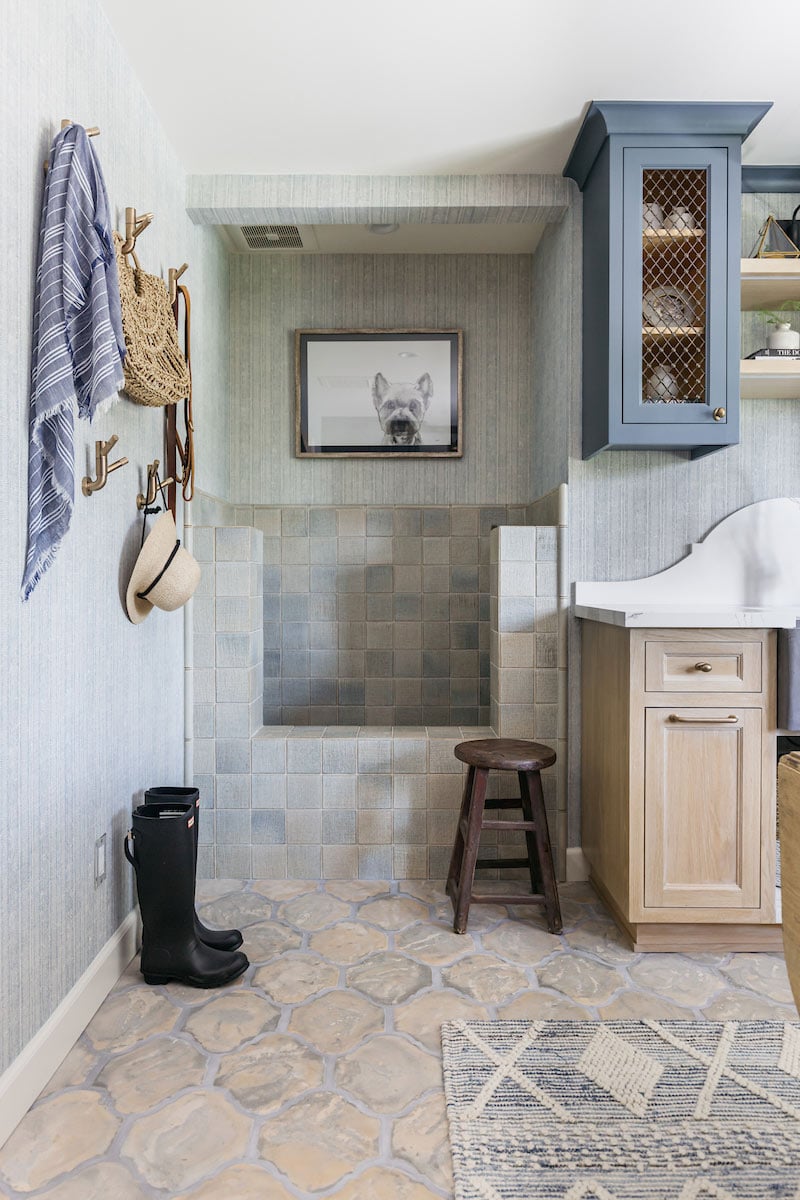
A mudroom pairs a stone-look tile floor in broad arabesques with a pet shower in textured neo-zellige tile for a fresh take on Islamic design.
32. Line-Dried
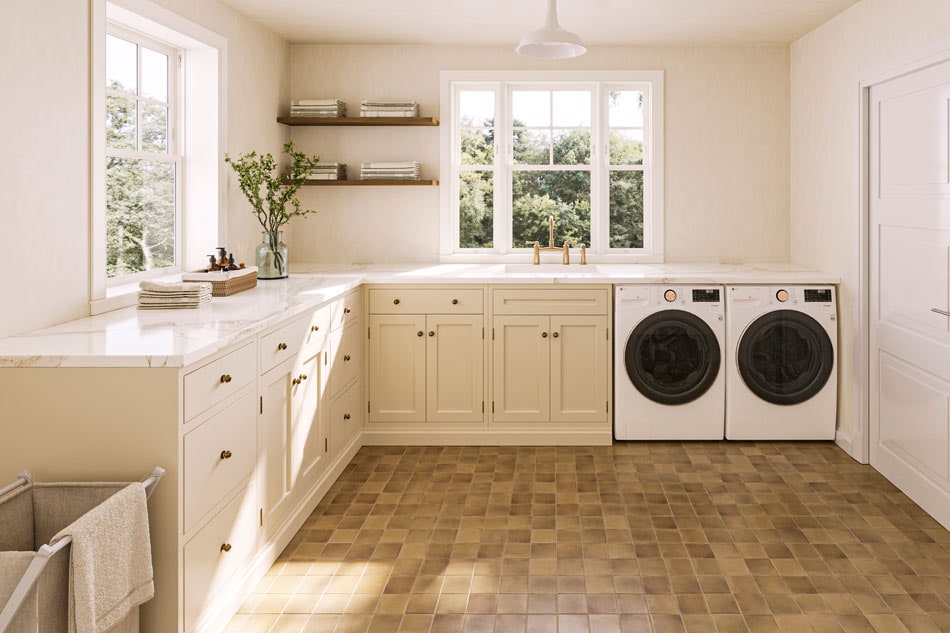
Laundry room floor tile gets a modern upgrade with ancient sensibilities: sunny-brown neo-zellige that gently waves underfoot.
33. Squeaky Clean
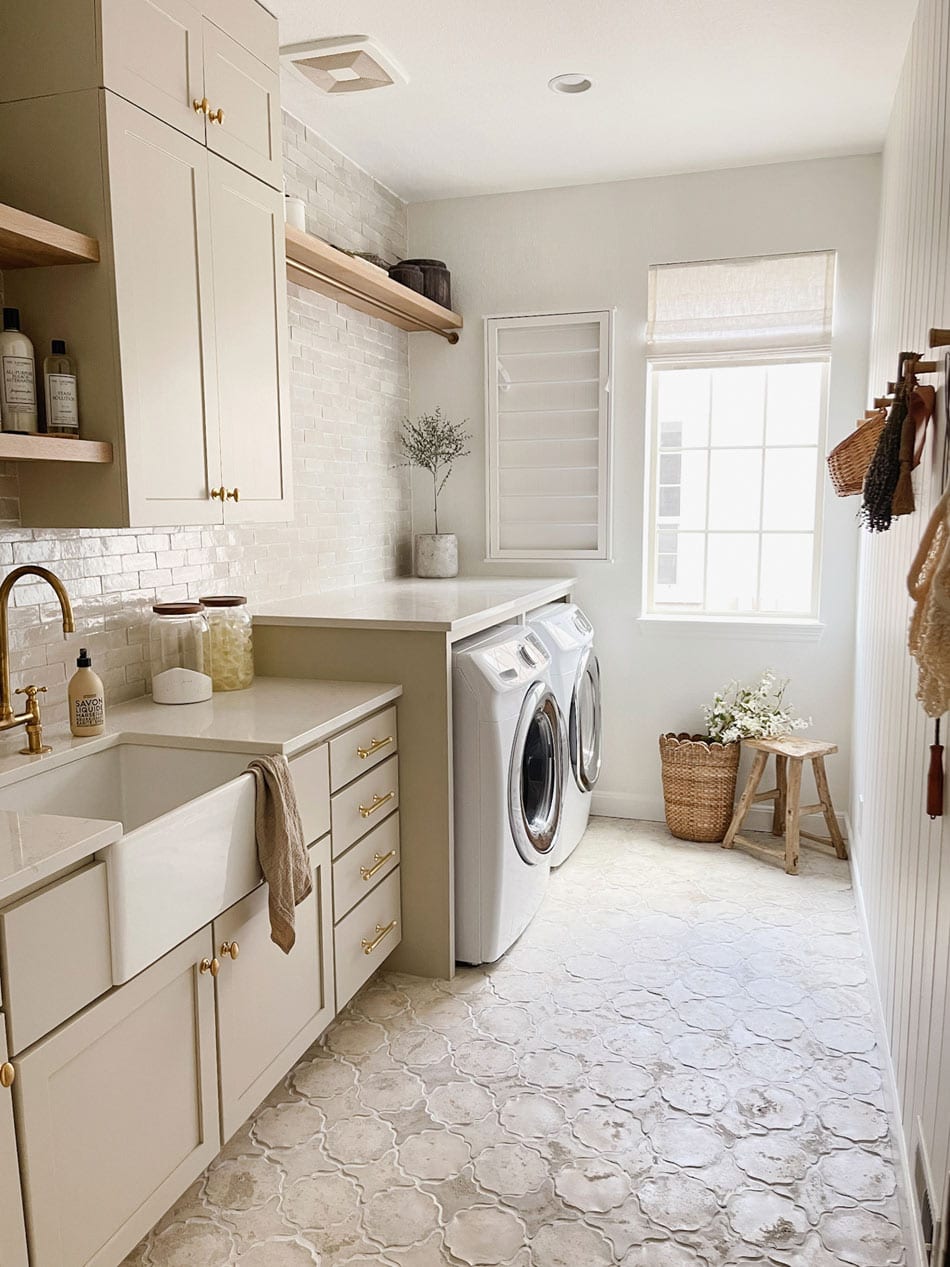
Limestone-look tile in arabesques illuminates a laundry room floor, neo-zellige tile in a subway layout on the backsplash wall. The Arabic flair is subtle and chic, wholly contemporary.
34. Fabulous Facade
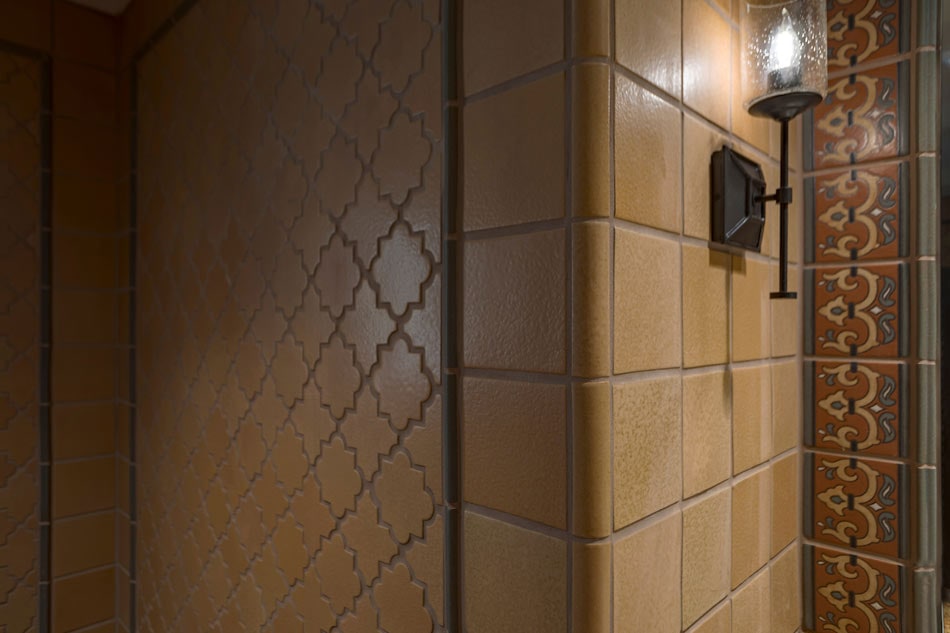
An outdoor entrance facade sports stone-look tile in ochre arabesques, a Moroccan-style burgundy border near the door.
35. Take It Outside
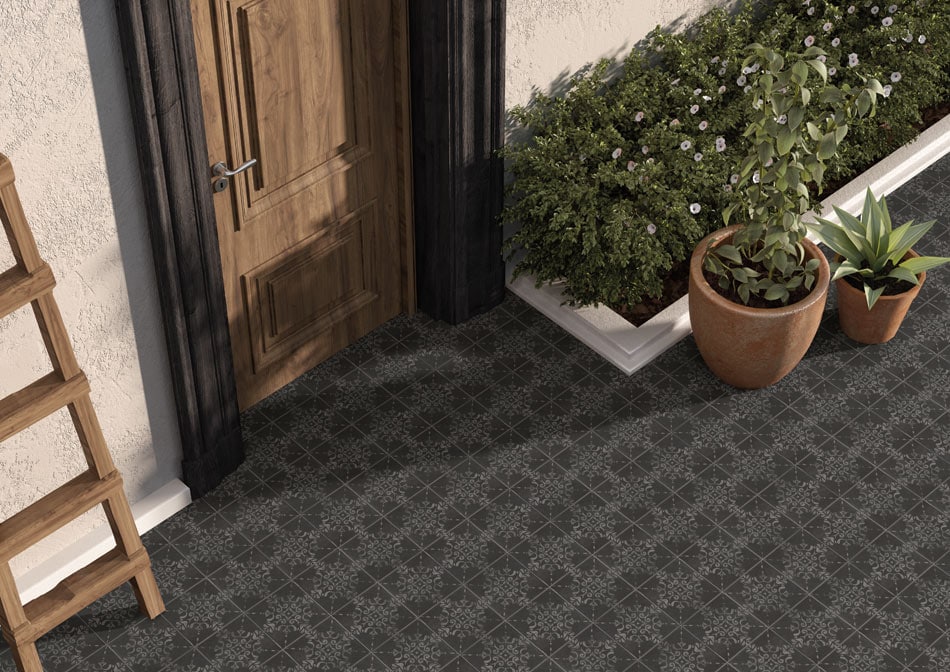
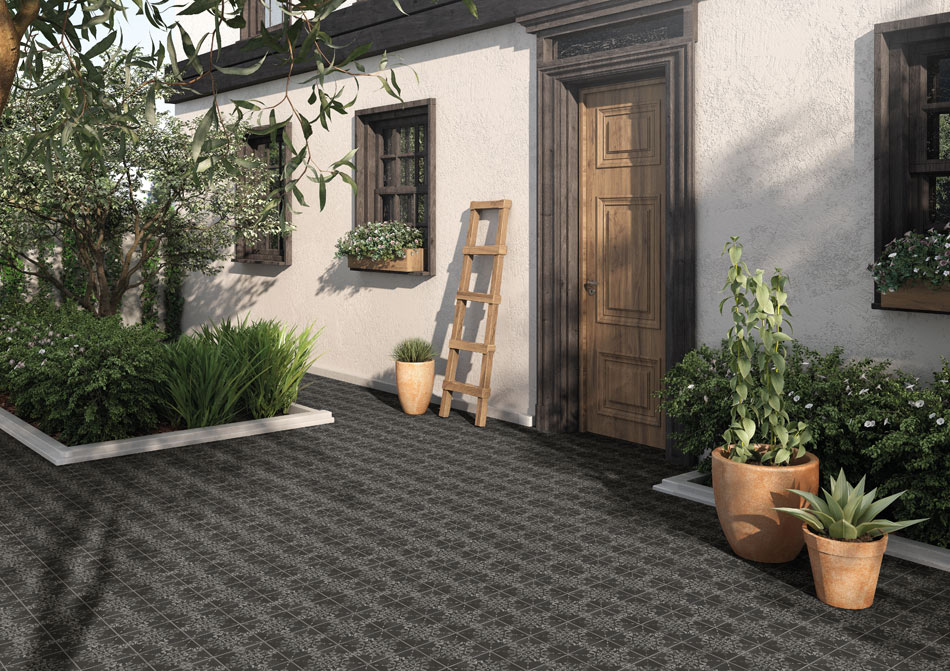
An exceptionally chic take on Islamic design, black concrete-look tile in Moroccan motifs brings the medieval to the modern patio.
36. Good Day, Sunshine
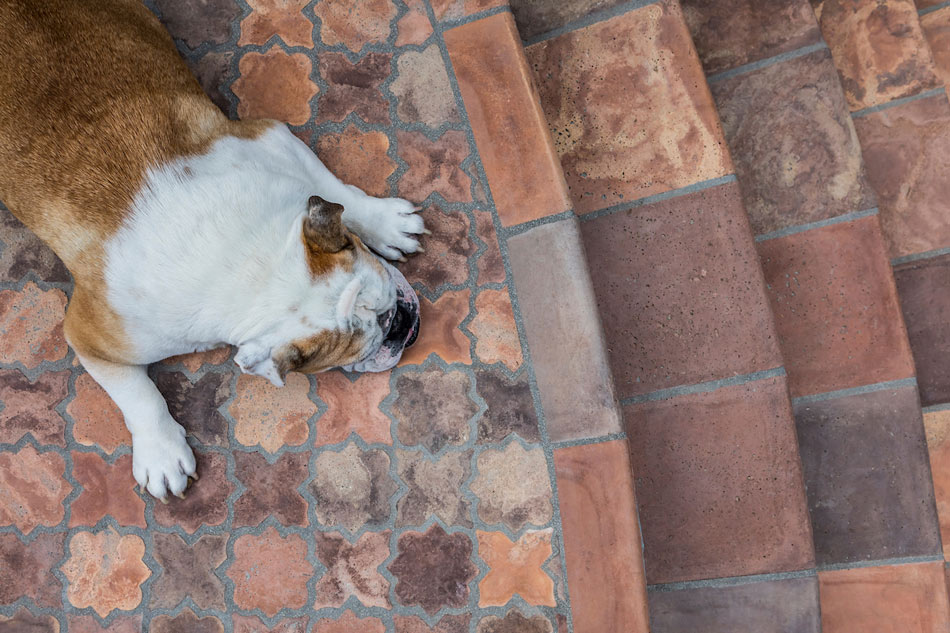
A terracotta- and stone-look tile star-and-cross mosaic on the patio exudes warm design and a cool surface for a pup.
37. Iced Tea
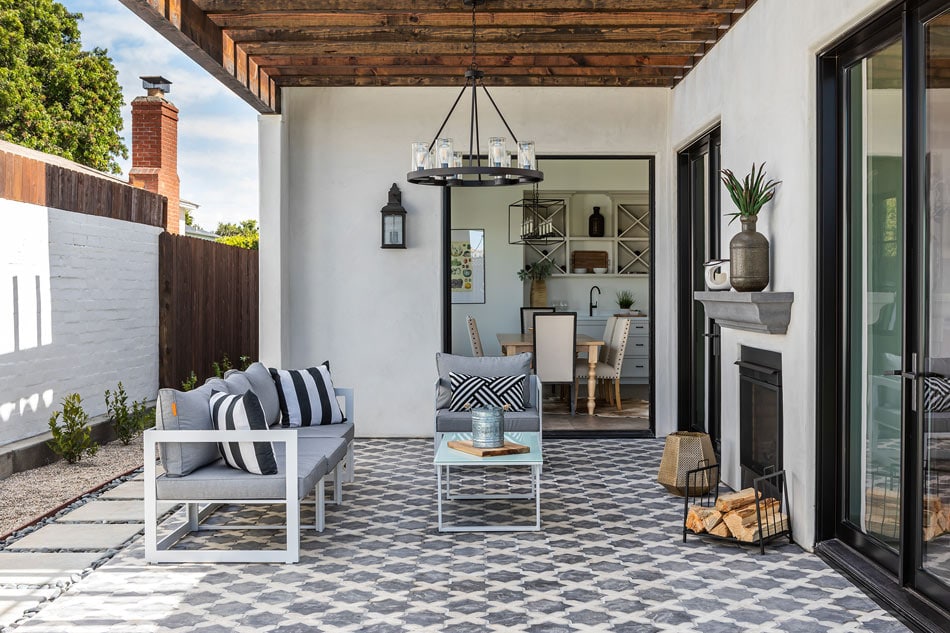
Sharp arabesques in gray marble-look tile create a dash of Islamic panache on a modern-day porch.
38. Poolside Manners
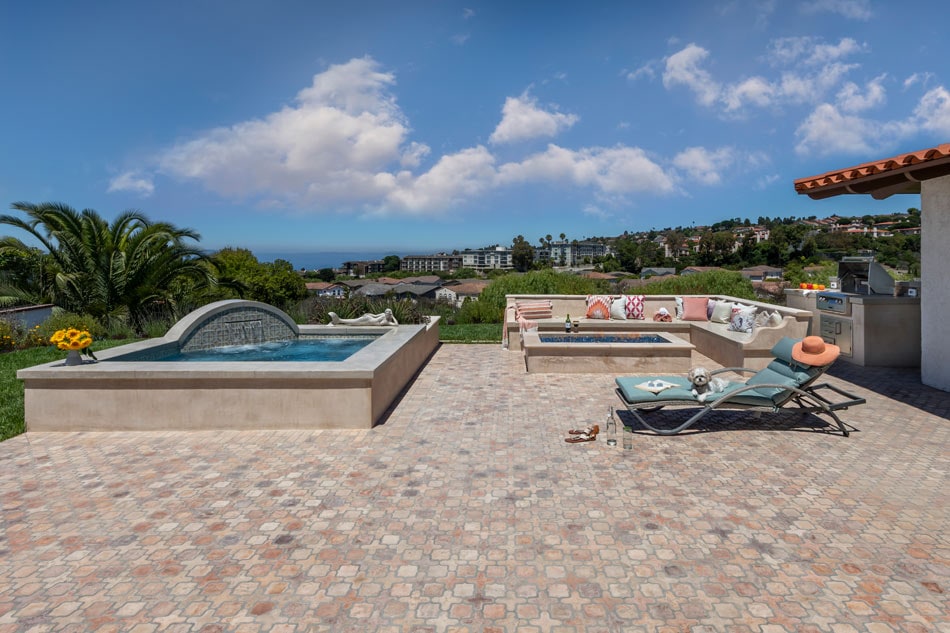
A poolside patio feels decidedly “now” as it whispers to the past with terracotta-look tile crosses and arabesques.
39. 20/20 Vision
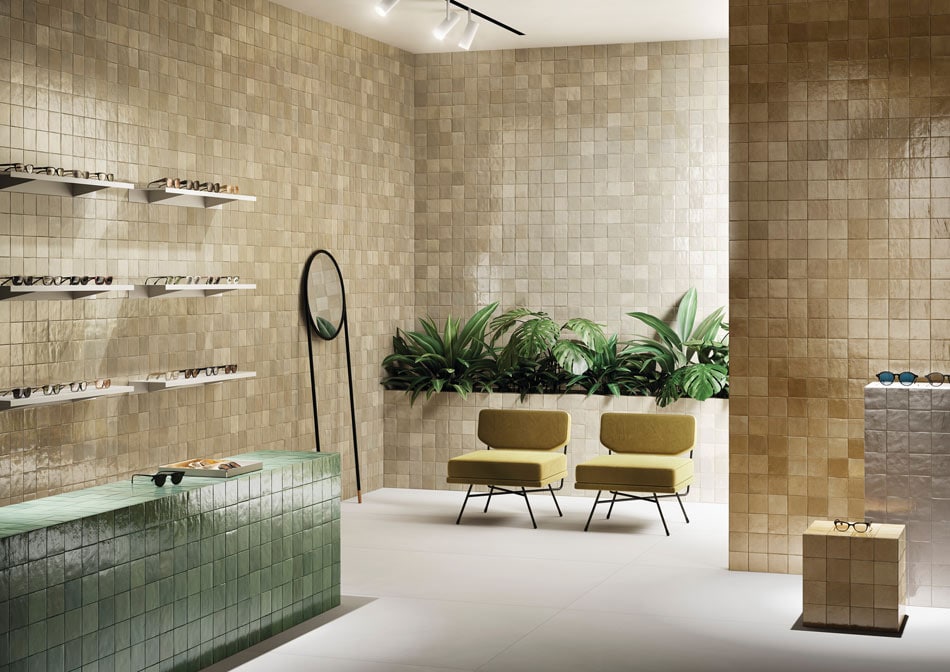
Today’s retail spaces get a luxe leg up with Islamic tile design. Here, neo-zellige bathes walls, planters, cases, and counters in amber and sage.
[Related: Your Guide to Tile for Outdoor Entertainment Spaces]
Modern Space, Ancient Geometry
The patterns haven’t changed in millennia. The spaces have evolved and adapted alongside them.
Modern Islamic tile designs bring geometric mastery into kitchens, bathrooms, lobbies, and poolsides. And they look completely at home in all of them.
Choose one wall; choose one floor. Let the shapes do the rest. At Why Tile, we’re the guide to tile making its mark on today’s spaces.
Browse our design gallery for tile inspiration spanning every room, color, size, shape, and layout.