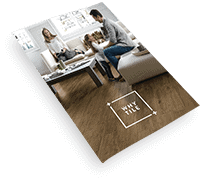

Home is your first space. Work is your second. Everything else is your third. Think about the library where you linger, the community center where you gather, the maker space where you tinker.
Third spaces are the vibrant backdrops of our shared civic life. Grassroots movements such as repair cafés capture exactly what makes them special. They’re a push against throwaway culture, championing quality, resilience, and the art of preservation.
These spaces need to last. They need to perform. They need to welcome every neighbor, day after day.
Ceramic tile offers a natural foundation for just this kind of space: sensory beauty with a rugged constitution that rises to every occasion.
[Related: Your Guide to Tile for Outdoor Entertainment Spaces]
What Are Third Spaces, and Why Do They Matter?
Sociologist Ray Oldenburg coined the term “third spaces” in his 1989 book The Great Good Place. Oldenburg argued that healthy communities need informal gathering places beyond home and work. These spaces should be accessible, welcoming, and low-pressure.
Third spaces take many forms:
- Libraries and reading rooms. Quiet anchors of public life, open to everyone.
- Community and recreation centers. Multipurpose hubs for fitness, classes, events, and gatherings.
- Coworking and maker spaces. Collaborative environments where independent workers and creators share resources.
- Cafes, diners, and public houses. The original third spaces, built around food, drink, and conversation.
- Repair cafés and pop-up community workshops. Newer additions to the category, where neighbors gather to fix, learn, and reduce waste together.
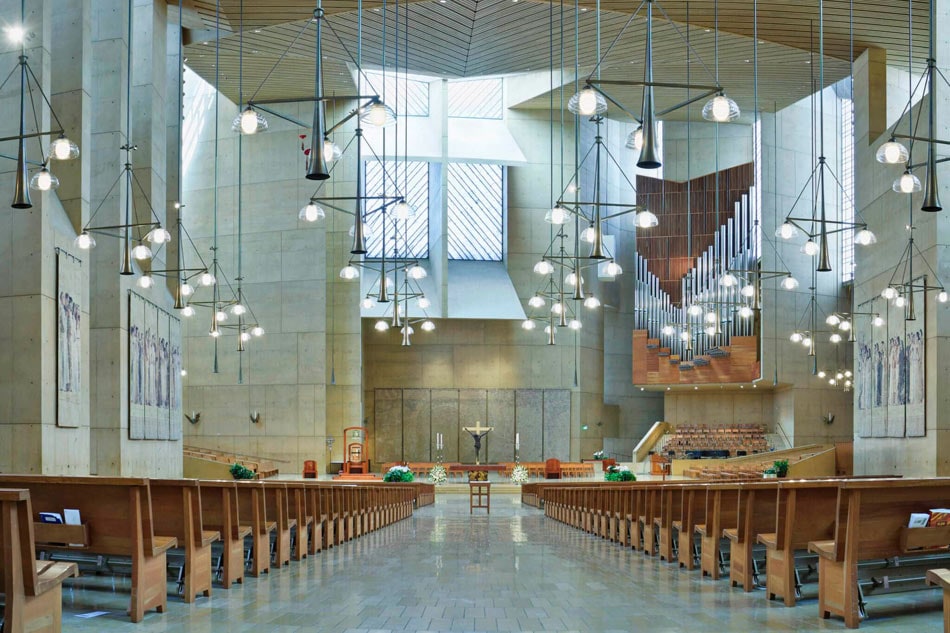
- Places of worship and cultural centers. Longstanding pillars of community gathering across faiths and traditions.
What these spaces share is more important than what distinguishes them. They see high foot traffic, diverse users, and constant activity across decades. They’re often indoor–outdoor or multi-zone.
Third spaces carry the wear of real community life.Ceramic tile is at the top of a limited list of surface materials that can gracefully carry the weight of constant use.
[Related: Why Ceramic Tile Is Perfect for Multipurpose Spaces]
Why Tile Belongs in Third Spaces
Third spaces ask more of their materials than almost any other environment. They see high foot traffic, spilled coffee, muddy boots, folding tables dragged across floors, and a lifetime of daily use. The material that can handle all of that while still looking beautiful earns its place.
Built for the Long Haul
Tile’s lifespan in high-traffic environments isn’t measured in years but in generations. Properly installed tile can last 50 years or more, outlasting every other common flooring material by a significant margin.
In a community space that expects extended, continuous use, that durability is both practical and economical. Fewer replacements mean lower lifecycle costs and less disruption to the community that depends on the space.
Hygienic by Nature
Third spaces accommodate everyone, so their surfaces need to handle everything they’ll bring. Ceramic tile’s nonporous surface doesn’t harbor bacteria, allergens, or moisture. It’s easy to clean and sanitize between heavy-use periods and resistant to the mold and mildew that thrive in shared environments.
For spaces that serve food, host children’s programs, or see post-event cleanup on a regular basis, that matters enormously.
Sustainability and a Second Life
The repair café ethos is tile’s too: quality over disposability, preservation over replacement, materials that earn their keep. Ceramic and porcelain tile are made from natural raw materials, and many ceramic tile options incorporate recycled content.
A decades-long lifespan for ceramic tile means dramatically less material ends up in landfill compared to flooring that needs regular replacement. And when tile does come out of a space through renovation or repurposing, it doesn’t have to end there.
Reclaimed tile has an active market among designers and homeowners. Broken tile finds new life in mosaic installations, garden pavers, and decorative accents. Tile is one of the few building materials that you can genuinely upcycle rather than discard.
That’s a fundamental feature for a third space committed to the values of repair and reuse.
Colorfastness in Public Architecture
Look closely at an old public building. Carpets wear thin. Wood panels bleach and dull. Paint peels. But ceramic tile holds its color with its original brilliance fully intact.
It’s elemental science. Unlike dyes or paints, tile color is baked into the material.
Manufacturers apply mineral-based pigments to the clay body before tile enters a kiln heated to over 2,000 degrees Fahrenheit. That extreme heat triggers a chemical transformation; the glaze melts and vitrifies, forming a glass-like, crystalline shield.
Color becomes an inseparable part of the tile itself: locked in and impervious to time.
Sunlight accelerates the fading of almost every other interior material. UV rays break down the chemical bonds in plastic, fabric, and wood. Because ceramic tile is entirely inorganic, UV exposure has no effect on its surface.
A community center with soaring floor-to-ceiling windows can embrace deep terracottas and vibrant cobalts. The colors will look the same in 30 years.
History bears this out. The geometric tiles of a centuries-old Spanish palace still gleam. The glazed tile of early 20th-century London Underground stations remains bright. The tiled fireplace surrounds of Victorian reading rooms look brand new.
[Related: Guide to Going Green With Ceramic Tile]
Third Space Tile Design: Tips for Communal Spaces
Third spaces aren’t designed for one type of person or activity. They need to work for everyone, and tile’s design versatility meets that challenge. Here’s how to make the most of it.
Prioritize Performance
In a third space, beauty and performance are both nonnegotiable. Look for these factors when choosing tile for high-traffic communal areas:
- Tile suggested for heavy-traffic zones (high resistance to surface abrasion)
- Slip-resistant finishes or textures in entryways, kitchens, bathrooms, and any indoor–outdoor transition areas
- Large-format tile in open floor areas for fewer grout lines, simpler cleaning, and a more seamless surface
- Stain-resistant grout or epoxy grout in food and beverage zones; mid-tone grout colors in busy corridors
Use Tile To Define Zones
Multipurpose third spaces often serve radically different functions in the same square footage. A community center might host a morning yoga class, an afternoon repair café, and an evening gathering in the same room. Ceramic tile can do the organizational work without permanent walls.
Here are a few examples of zoning strategies:
- Place different tile colors, blocks, or patterns to signal different functional zones without signage.
- Try a change in format (such as large-format floor tile that transitions to mosaic) to communicate a shift from circulation space to gathering space.
- Install accent tile borders, courses, or insets to instinctively mark pathways, stage areas, or entry points.
Embrace Indoor–Outdoor Continuity
Third spaces frequently spill outdoors. Patios, courtyards, community gardens, and outdoor workshop areas are natural extensions of the interior. Continuous tile from inside to out creates a seamless, expansive feel and simplifies maintenance.
Take these indoor–outdoor tactics into consideration:
- Choose tile rated for outdoor use, with appropriate slip resistance and freeze-thaw resistance where needed.
- Note that consistent tile across indoor and outdoor zones makes spaces feel larger and more intentionally designed.
- Don’t shy away from colorful tile if you want it. Outdoor tile in communal spaces benefits from the same fade resistance as indoor tile.
Design for Every Visitor
Third spaces exist to serve everyone. Tile supports inclusive design in ways that matter:
- Smooth, large-format tile floors are wheelchair and mobility aid-friendly.
- Tactile tile strips in contrasting colors help visually impaired visitors with wayfinding.
- Nonporous surfaces support the hygiene needs of visitors with allergies or sensitivities.
- Durable, easy-clean surfaces reduce the maintenance burden on volunteer-run or under-resourced community organizations.
[Related: 39 Tips for Using Ceramic Tile Outdoors]
Third Spaces That Show Tile at Work
The spaces below span libraries and learning centers, community restaurants and cafés, working spaces and multipurpose halls. Each shows tile doing what it does best in a shared space: anchoring design, handling demands, and welcoming everyone who enters.
Brainstorming at Brunch

Wood-look tile in poplar, teak, and pine tones escorts the eye through this public space, built for chatting or chilling. A houndstooth layout makes a fashion statement while elongating the floor’s footprint.
Break Time
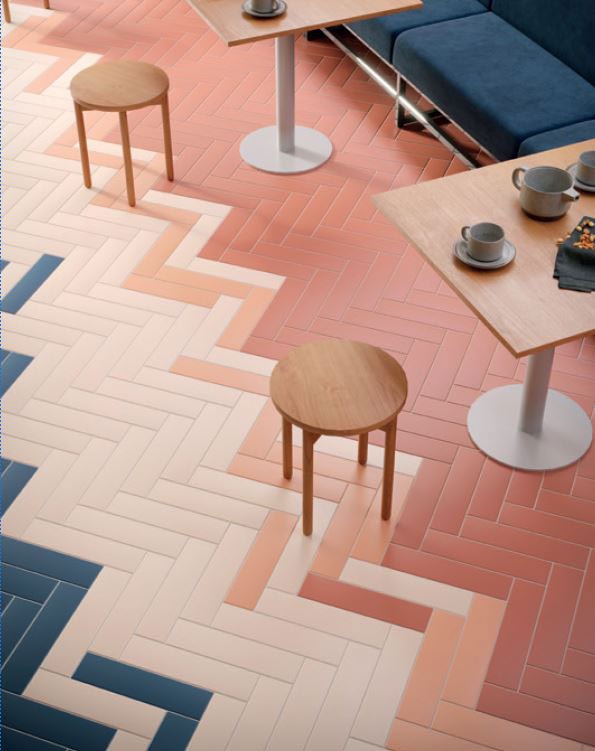
A cafeteria-style third space uses floor tile in matte terracotta, peach, and blue to mark eating and walking zones. The staggered herringbone layout keeps it feeling fun yet focused.
Prime the Engine

Mirror-look tile with a studded texture brings an effortless cool factor to this shared dining space’s bar. Paired with gray stone-look floor tile, it’s an area that invites you to take a seat.
All About the Optics
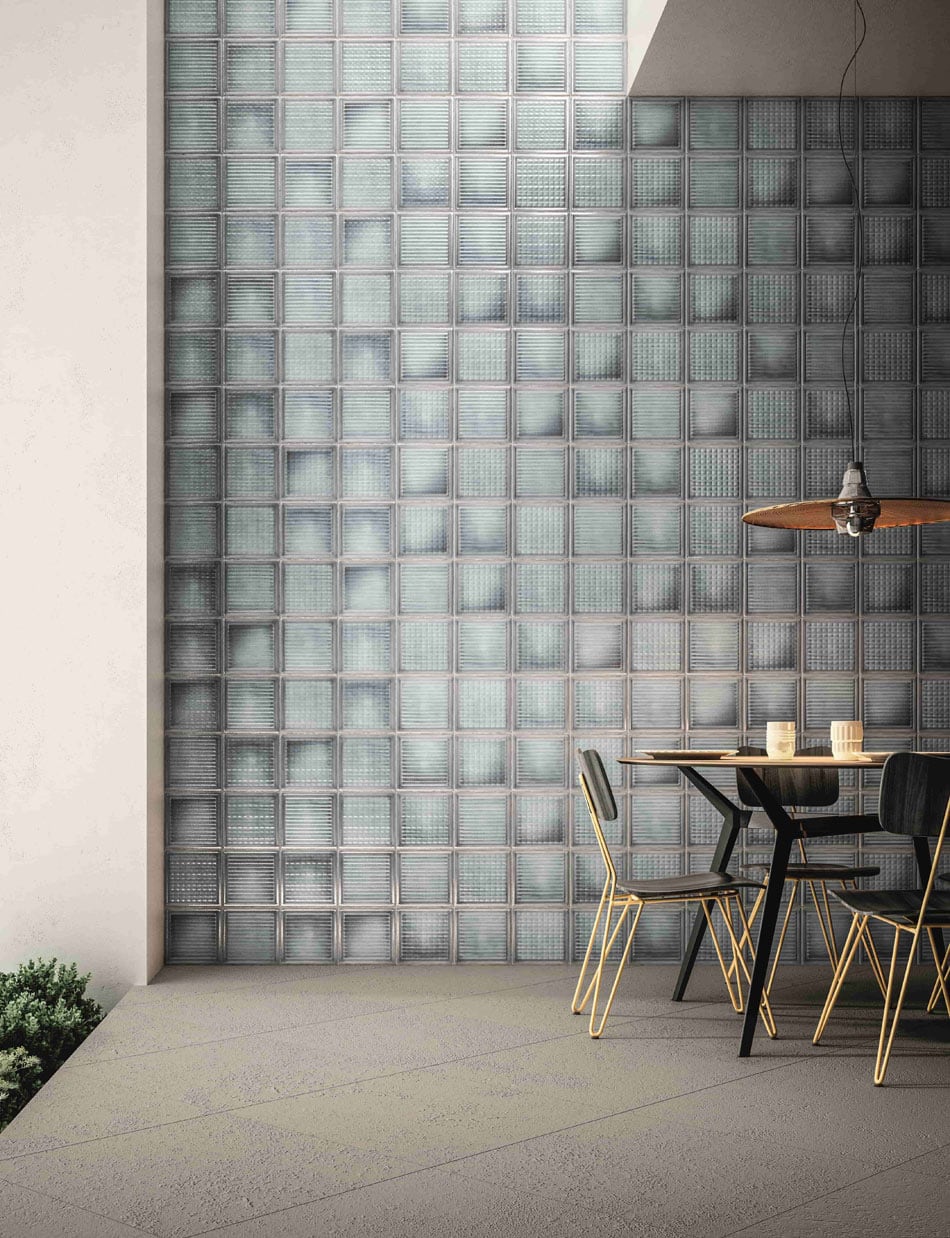
Dusky azure tile beams on this indoor–outdoor patio wall. Stamped with grids and ridges echoing glass blocks, the texture beckons touch. On the floor, textured cement-look tile lends the third space traction and chic energy.
Top of the World
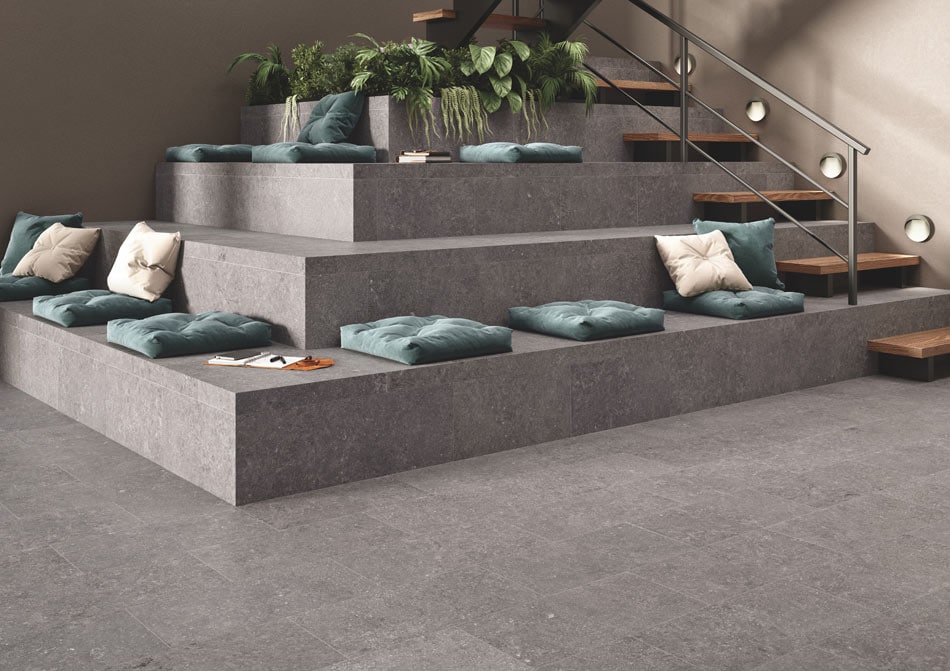
Public lobbies are perfect places for tile to shine. Here, subtly speckled stone-look tile adorns a blocked pyramid built for lounging and learning.
Nose in a Book
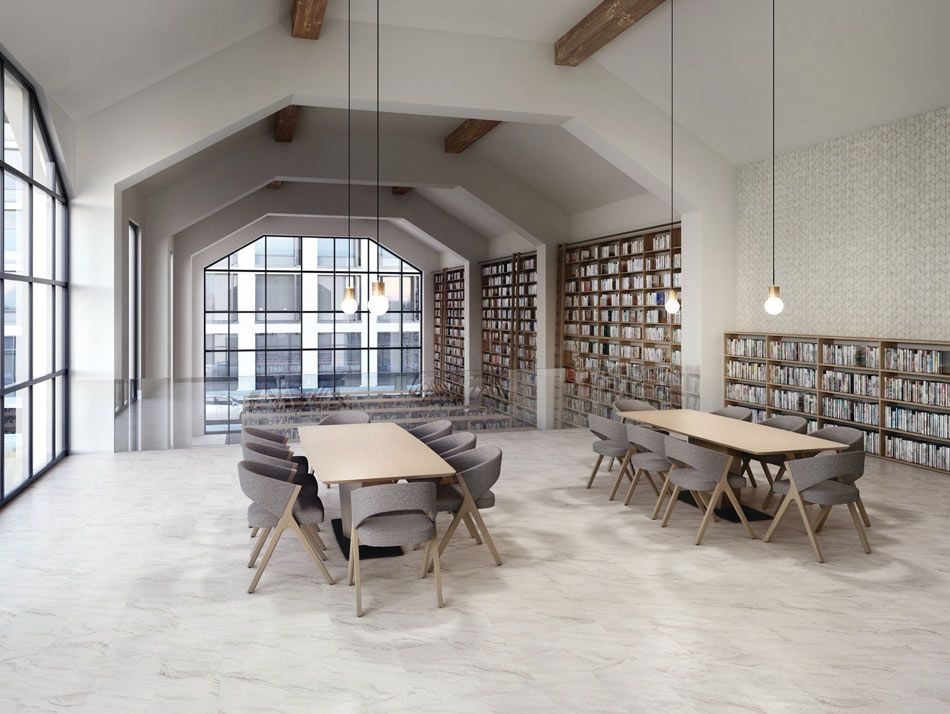
This public library takes a soothingly stylish approach to tile design. Ivory marble-look tile sweeps across the floor, withstanding the scooting and shuffling of chairs. On the accent wall, an elegant chevron layout plays with shape and size as natural light streams in.
H-O-R-S-E
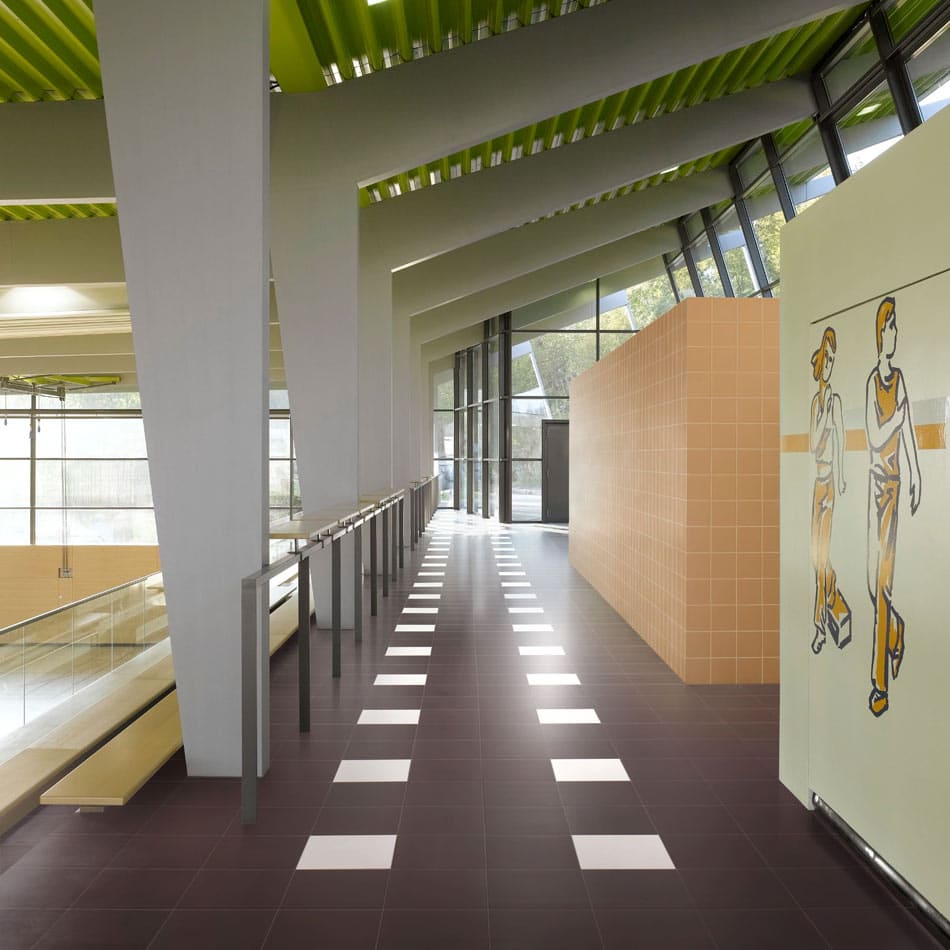
As a high-energy third space, a gym doesn’t have to feel cold or sterile. Deep plum tile grounds the floor, as white tiles mark walking lanes. Matte peach tile on divider walls lets the area breathe. A retro-inspired mural on a pale lime background brings it all together.
Tumbleweeds and Tumblers

This Southwest-inspired café lets sculpted emerald kitkat tile do the talking in a spacious niche (complete with cacti). As its pinstripe ridges catch light, variegated gray stone-look floor tile handles the hustle and bustle.
Chocolate Mousse
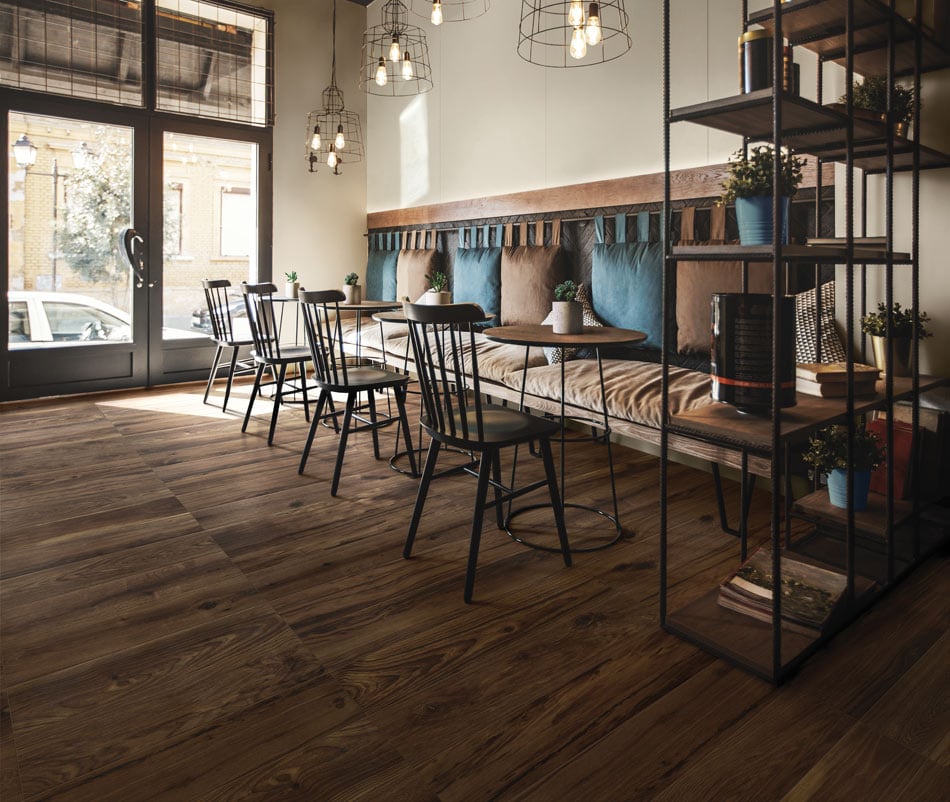
This restaurant is ready for the midday rush and the evening poetry reading. Rows of rich walnut-look tile line the floor. Large vertical tile panels adorn the walls, their bone-white hue an ideal complement to the floor’s depth.
Soda and Sunlight
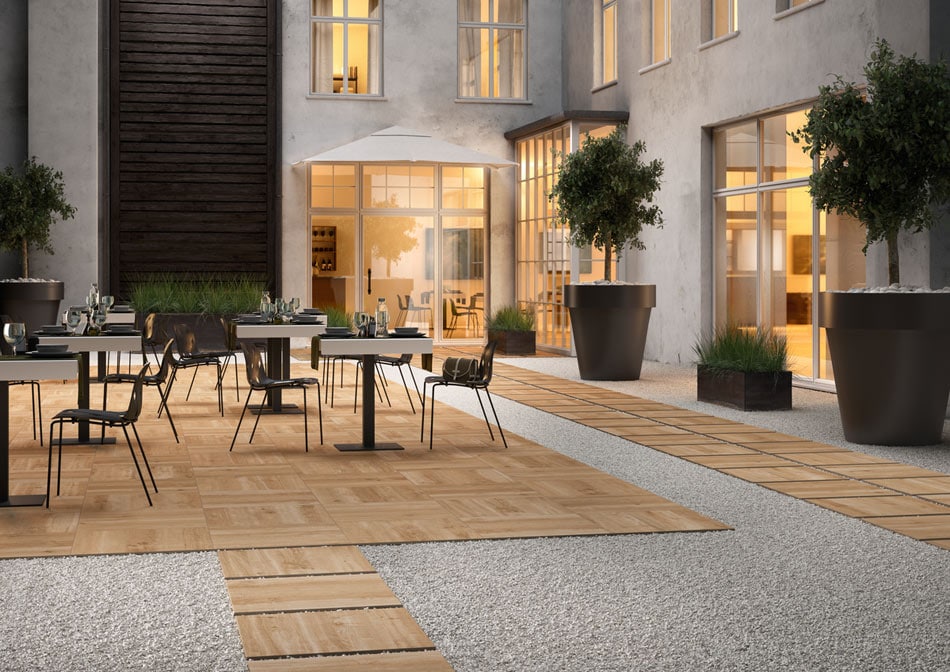
Zoning with tile in third spaces is on fine display in this courtyard. Honey-brown wood-look tile marks paths to and from the outdoor dining space, as well as the main walkway.
Stoked
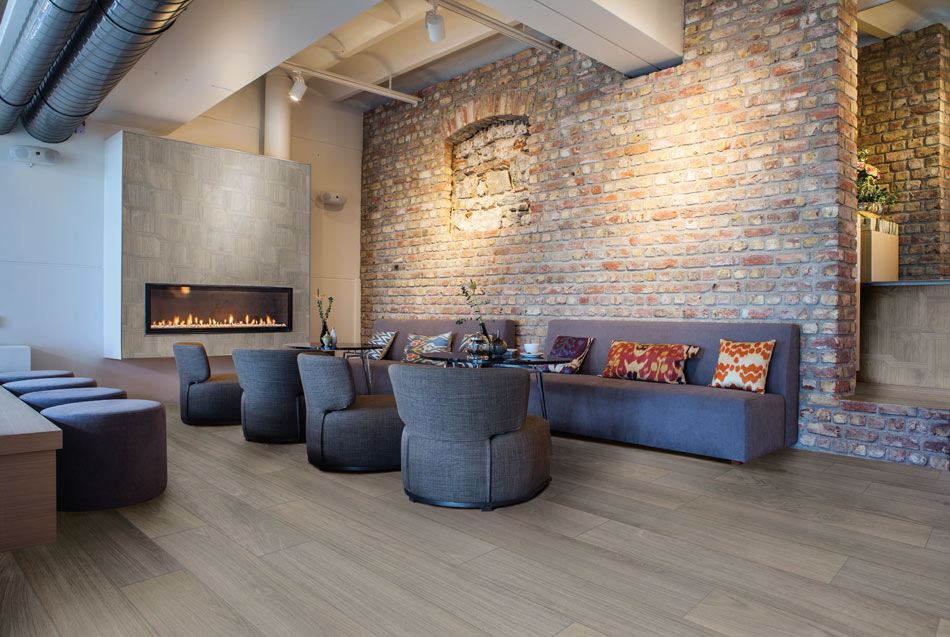
This distillery-meets-restaurant feels like a shared living room. Barley-brown wood-look tile in a classic plank layout is rustic and tough enough for folks moving to and fro. Atop the fireplace surround, greige wood-look tile fascinates in a basketweave mosaic.
Spread Your Wings
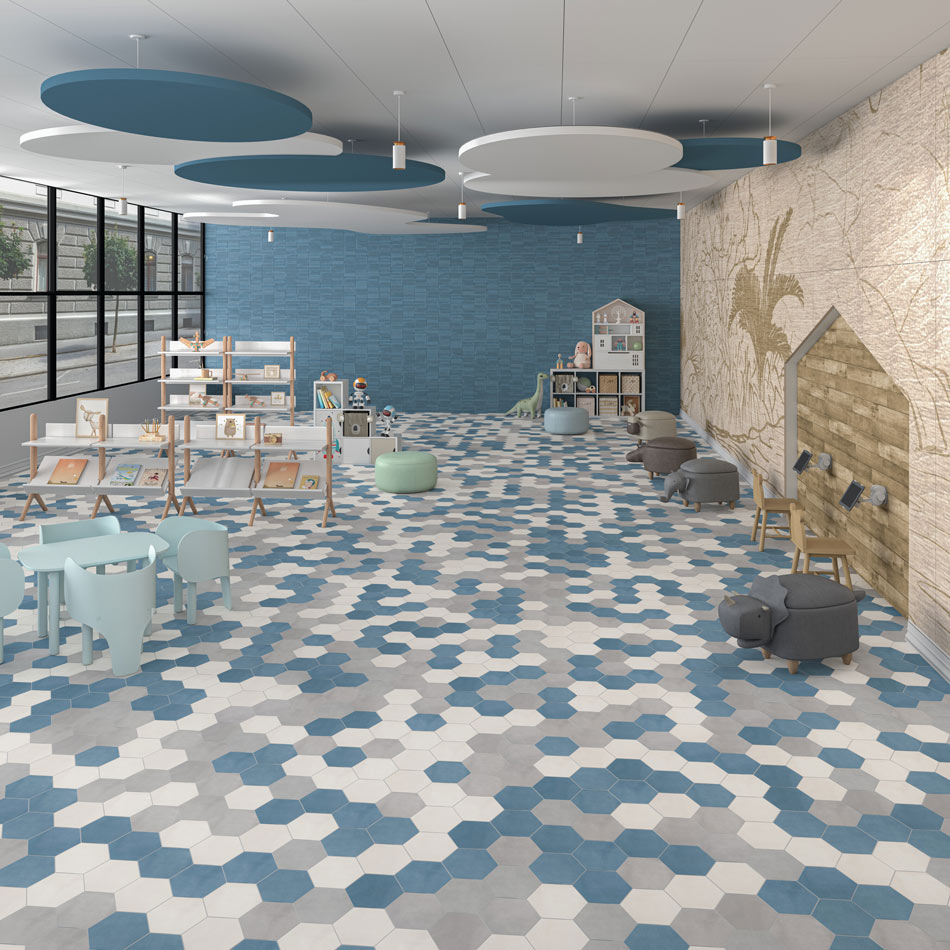
A public preschool and daycare center is livened up by gray, blue, and white hex tiles on the floor. The back accent wall sports peacock-blue vertical tile, while the feature wall boasts a biophilic wood-look design pattern.
Hepcats and Kittens
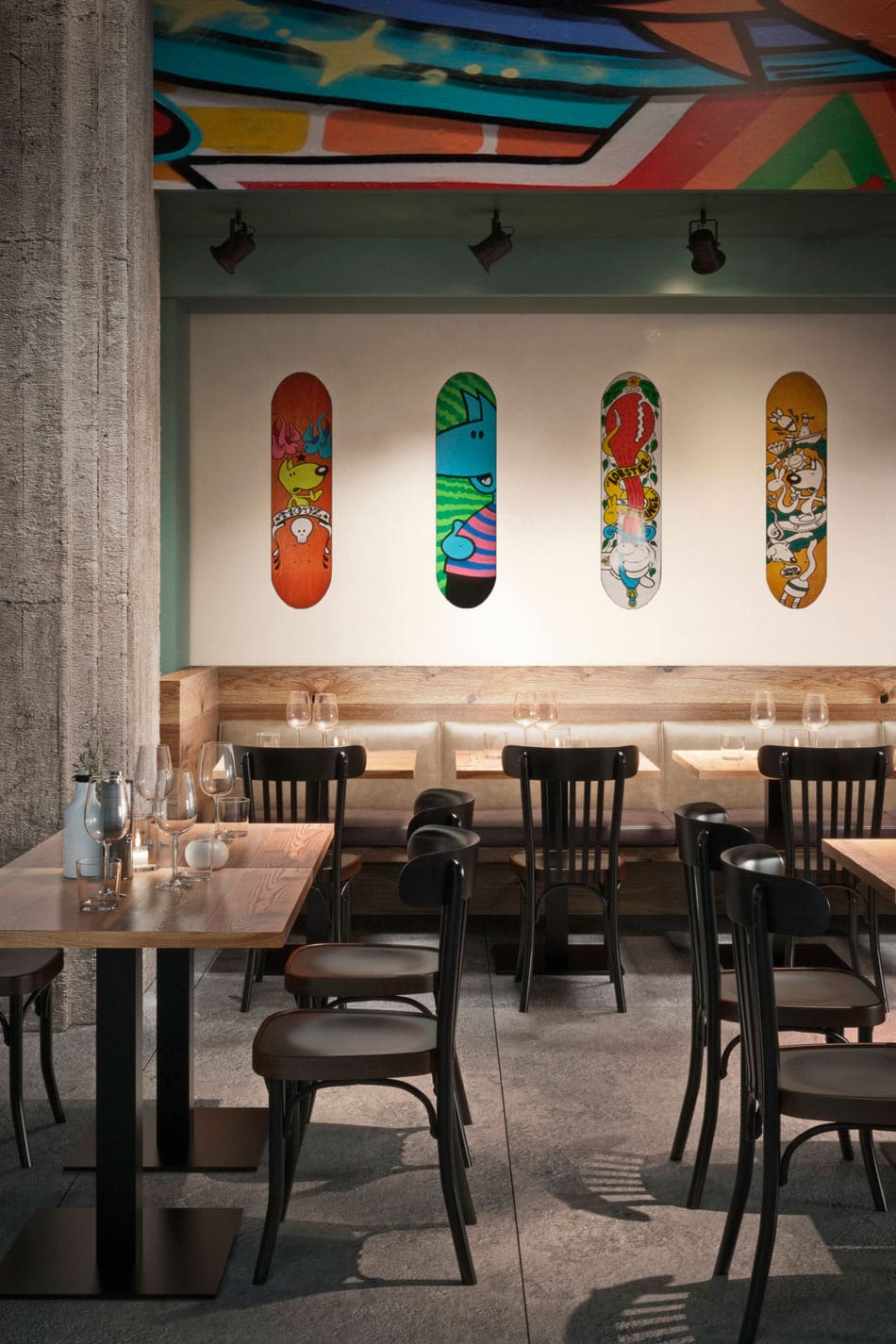
In an innovative take on third space tile design, this restaurant invites local artists to design their own tile. Those pieces become fixtures that pop across the wall and add savory community flavor. Meanwhile, mottled stone-look floor tile does the dirty work (and cleans easily).
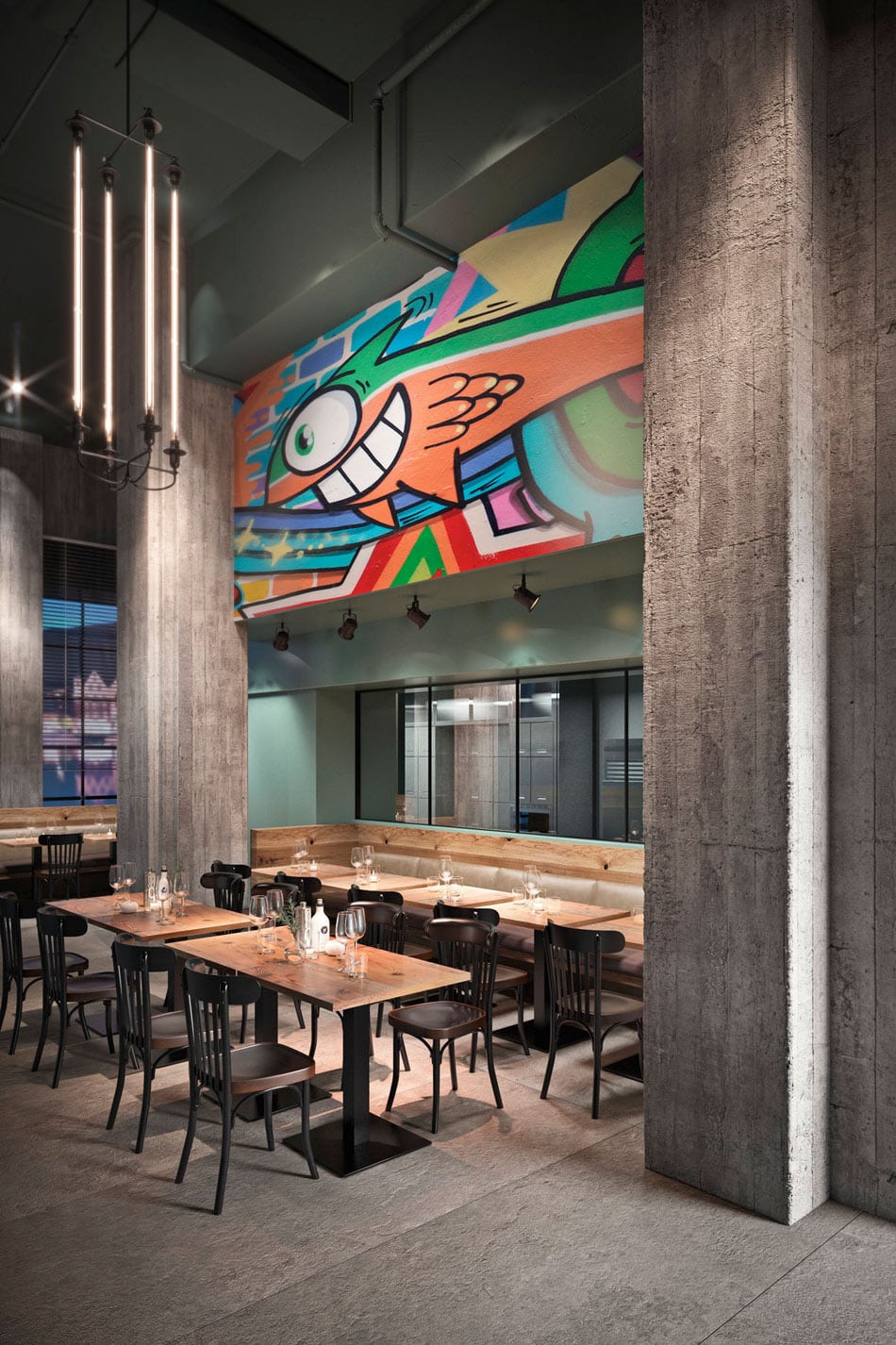
A massive tile slab glazed with a zany fish hangs above dining tables, a bolt of color and whimsy.
Flamingos and Seafoam
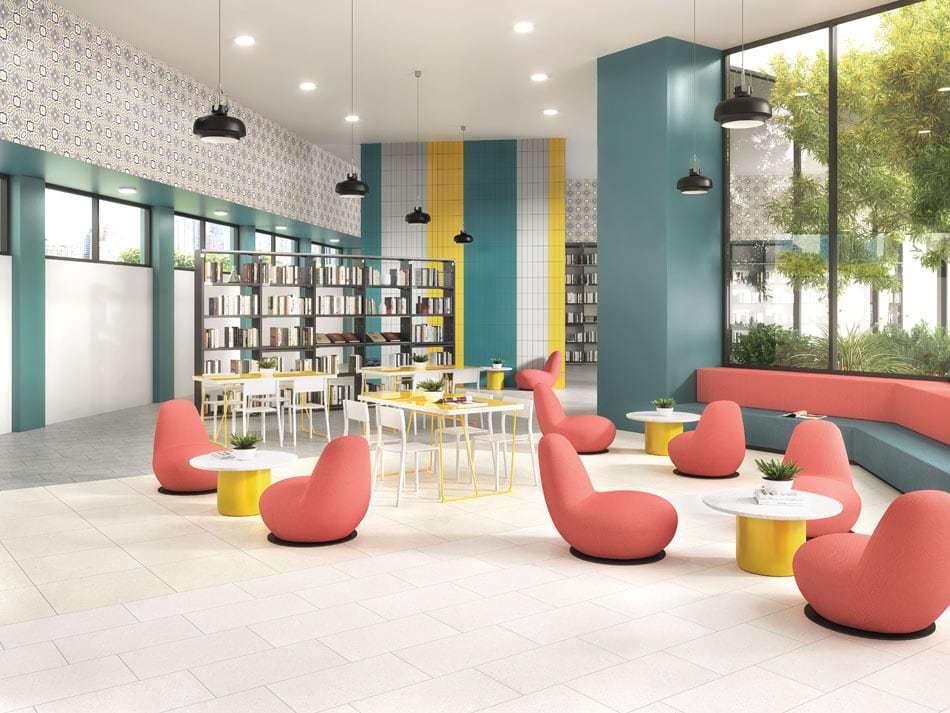
Ivory stone-look tile in a subway layout lays the airy foundation for this playful children’s library. A divider wall sports stripes of vibrant vertical tile. Anywhere kids gather, your flooring (and your walls, for that matter) need to be hardy.
Postmodern Lit
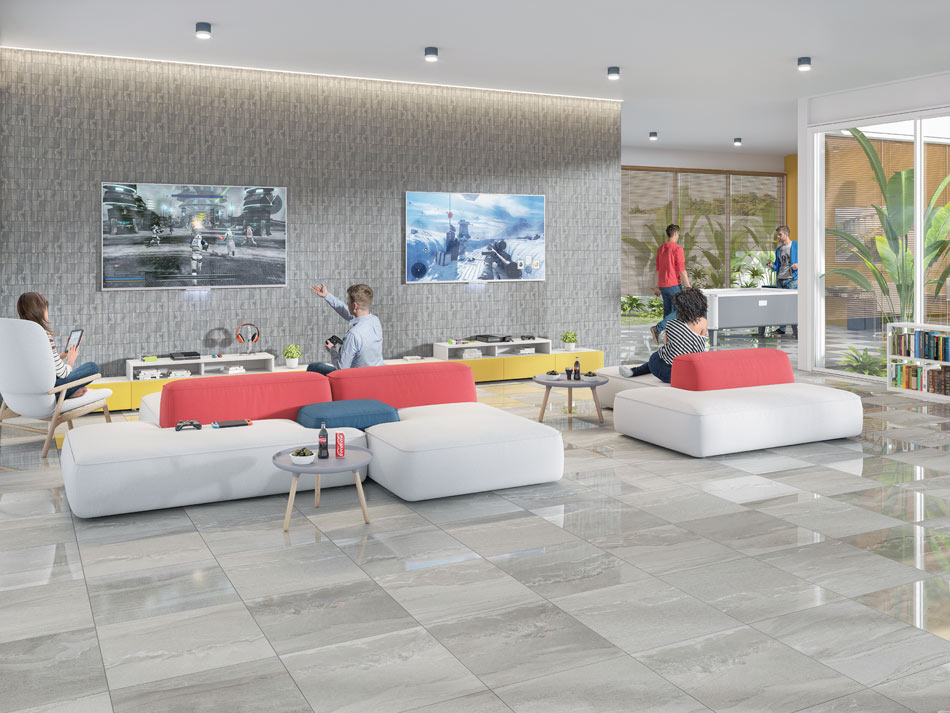
This college common room lets students kick back on a patchwork of stone-look floor tile, ultra-high-gloss mixed with matte. The feature wall beckons with an offset linear mosaic.
Bourbon and Black Olive
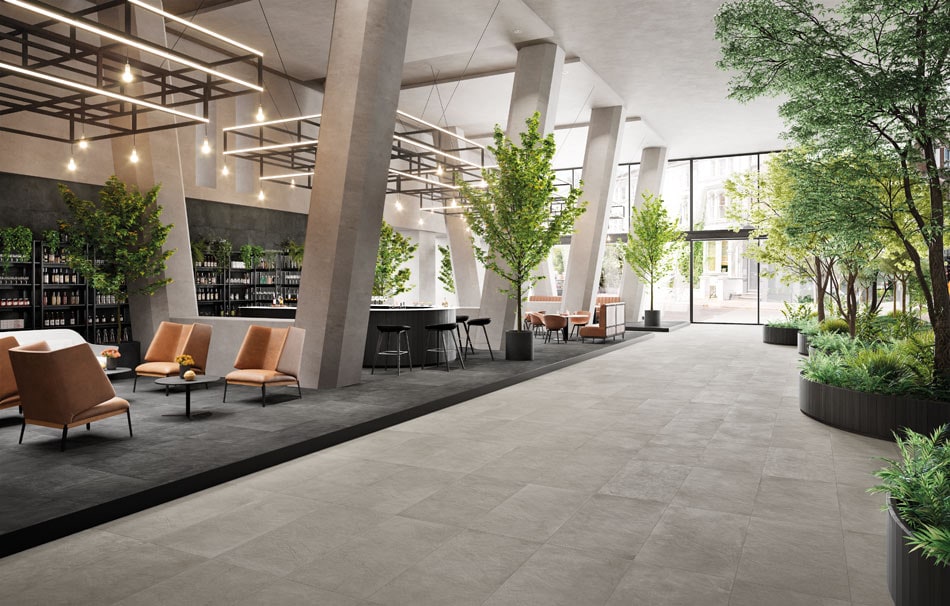
The classic light-and-dark tile duo takes a twist in this cafeteria. Realistic textured stone-look tile in silvery gray designates the walking zone, stretching outdoors. Atop the raised lounge zone, brushed black tile puts you in the mood to mingle.
The Symposium
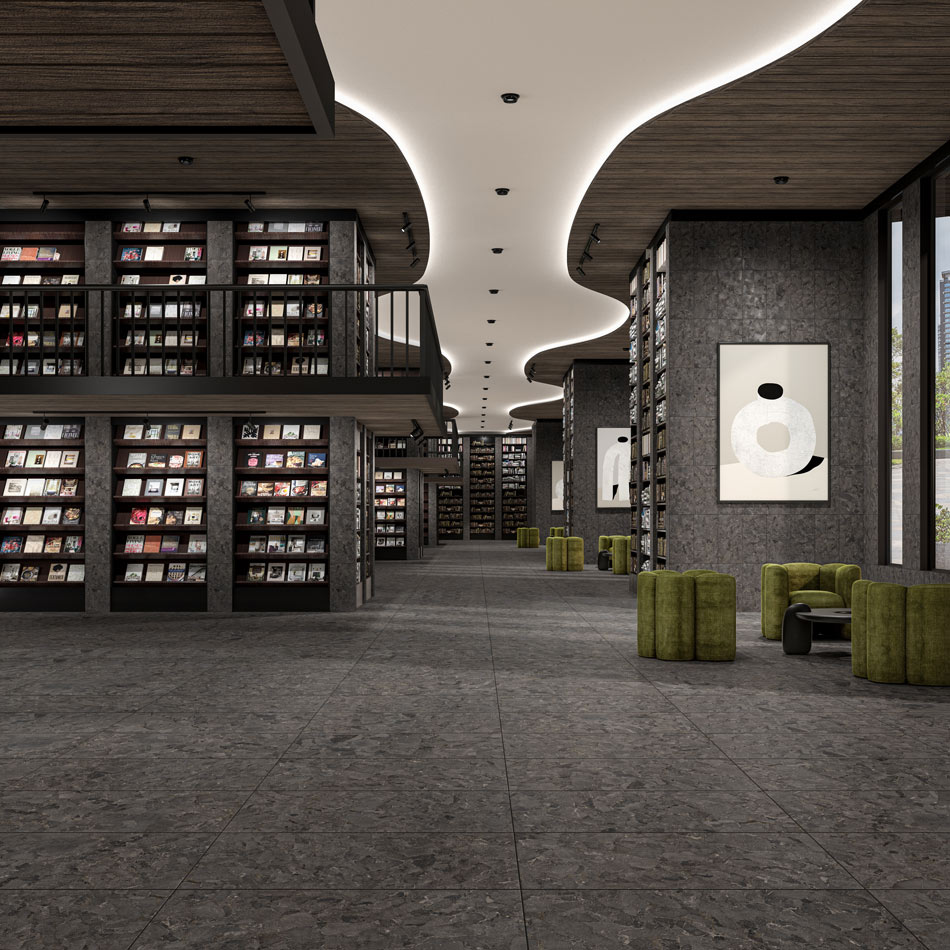
This majestic library is drenched in charcoal-toned aggregate-look tile: floors, walls, even bookcase facades. As a third space, it balances high art with comfort using plush seating, LED lighting, and tall windows.
A Shot of Oat Milk
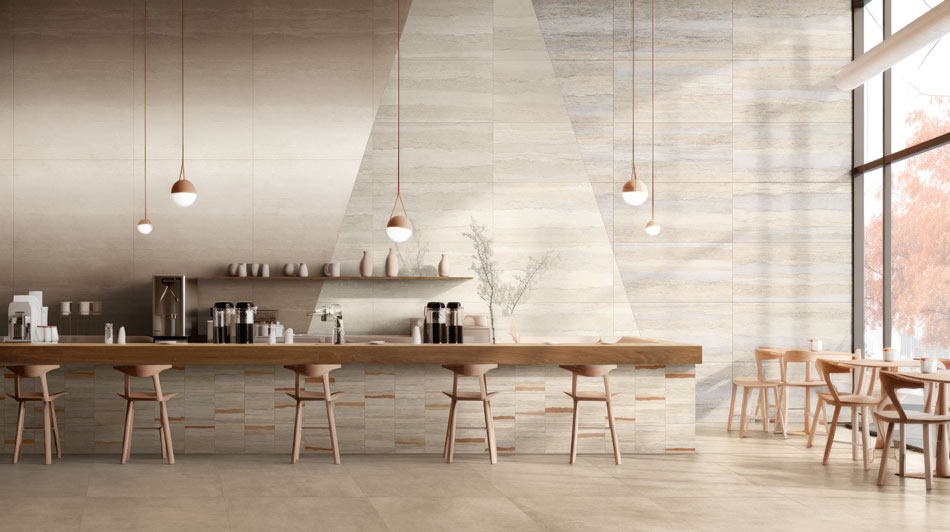
This warm and earthy coffee bar, cladded in sandstone-look tile exudes peace. Across the bar, stone-look tile shows layers of burnt orange. A silky neutral palette pulls it all together.
[Related: Sustainable Case Studies]
Meet Here. Work Here. Play Here. Tile Here.
The best third spaces are built to last, and so is tile. Whether you’re designing a community kitchen, outfitting a reading room, or reimagining a multipurpose hall, tile brings the durability, hygiene, and design range that shared spaces demand.
It also brings something special: a sense that the space was built with care for people who deserve it. That’s the third space ethos — that’s what tile is for.
Browse our design gallery for inspiration spanning every tile look, color, size, shape, and space. Your community deserves a beautiful, lasting foundation. At Why Tile, we’re here to help you find it.